
What Is Spondylolisthesis?
Spondylolisthesis is a spinal condition in which one vertebra shifts out of its usual alignment relative to the vertebra below it. The shift most often affects the lower back and may relate to a small bone defect, age-related changes, injury, or a structural difference present from birth. Symptoms vary by person.
Quick Facts About Spondylolisthesis
Category
Spinal alignment condition
Used for
Describing vertebral displacement
Common confusion
Often confused with spinal stenosis
Also called
Slipped vertebra, Vertebral slippage
Often discussed with
Back Pain Treatment
Key Takeaways About Spondylolisthesis
- The condition involves movement between neighboring vertebrae.
- Lower-back cases may affect posture, movement, or nerve function.
- Spondylolisthesis is not the same as spinal stenosis.
How Spondylolisthesis Works
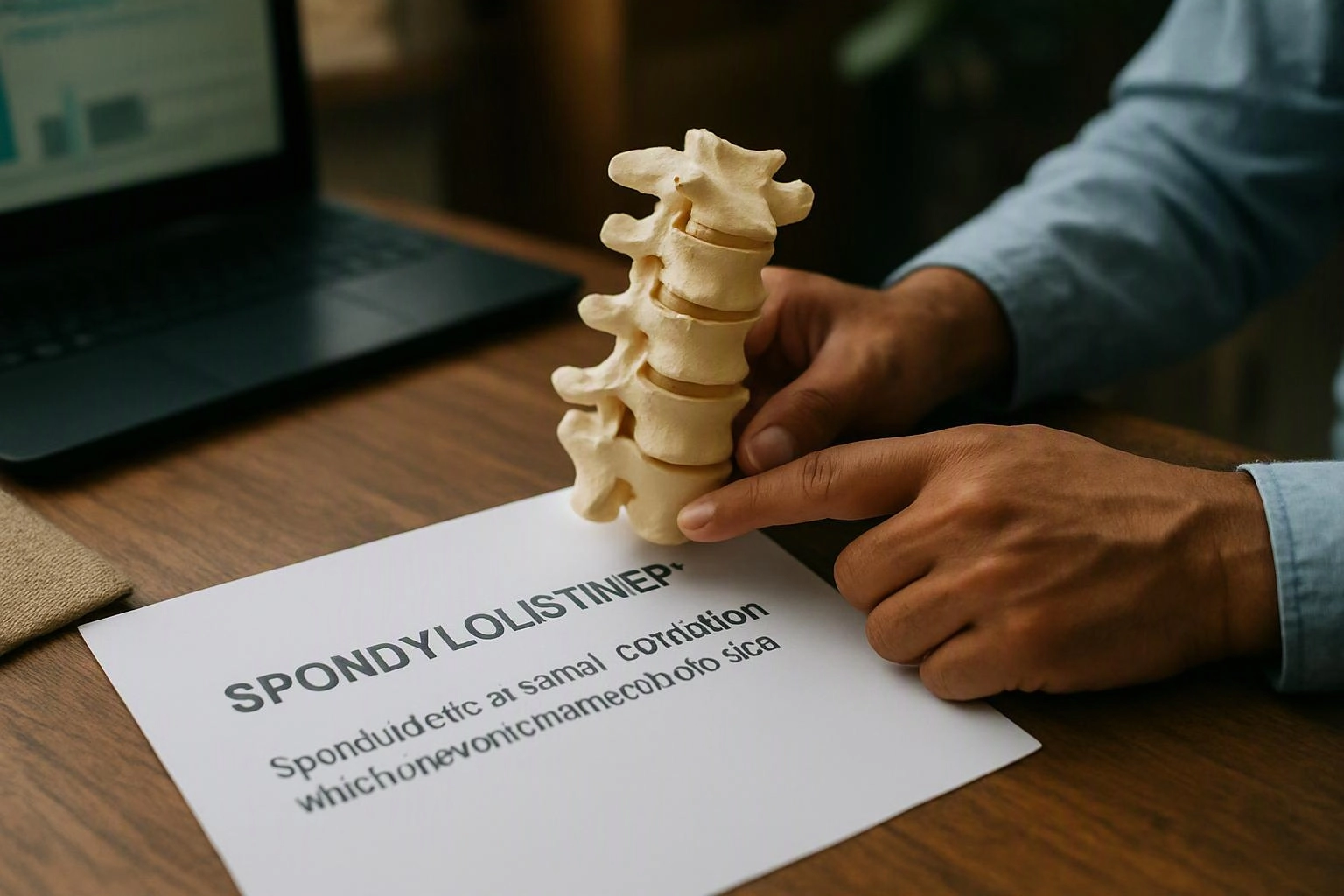
Spondylolisthesis describes a change in the relationship between neighboring spinal bones. A clinician considers the location of the shift, the direction of movement, and the condition of nearby joints and tissues. The lumbar spine is a common area because it carries substantial load during standing, walking, and bending.
Related glossary terms: Lumbar Spine, Spinal Stenosis, Nerve Root Compression.
Assessment may include posture, walking pattern, spinal motion, muscle control, and symptoms that follow a nerve pathway. Imaging can show the position of the vertebrae and help distinguish displacement from related conditions. Spinal stenosis describes narrowing around the spinal cord or nerves, so the two terms can appear together without meaning the same thing. Care planning depends on the examination findings and the person’s symptoms.
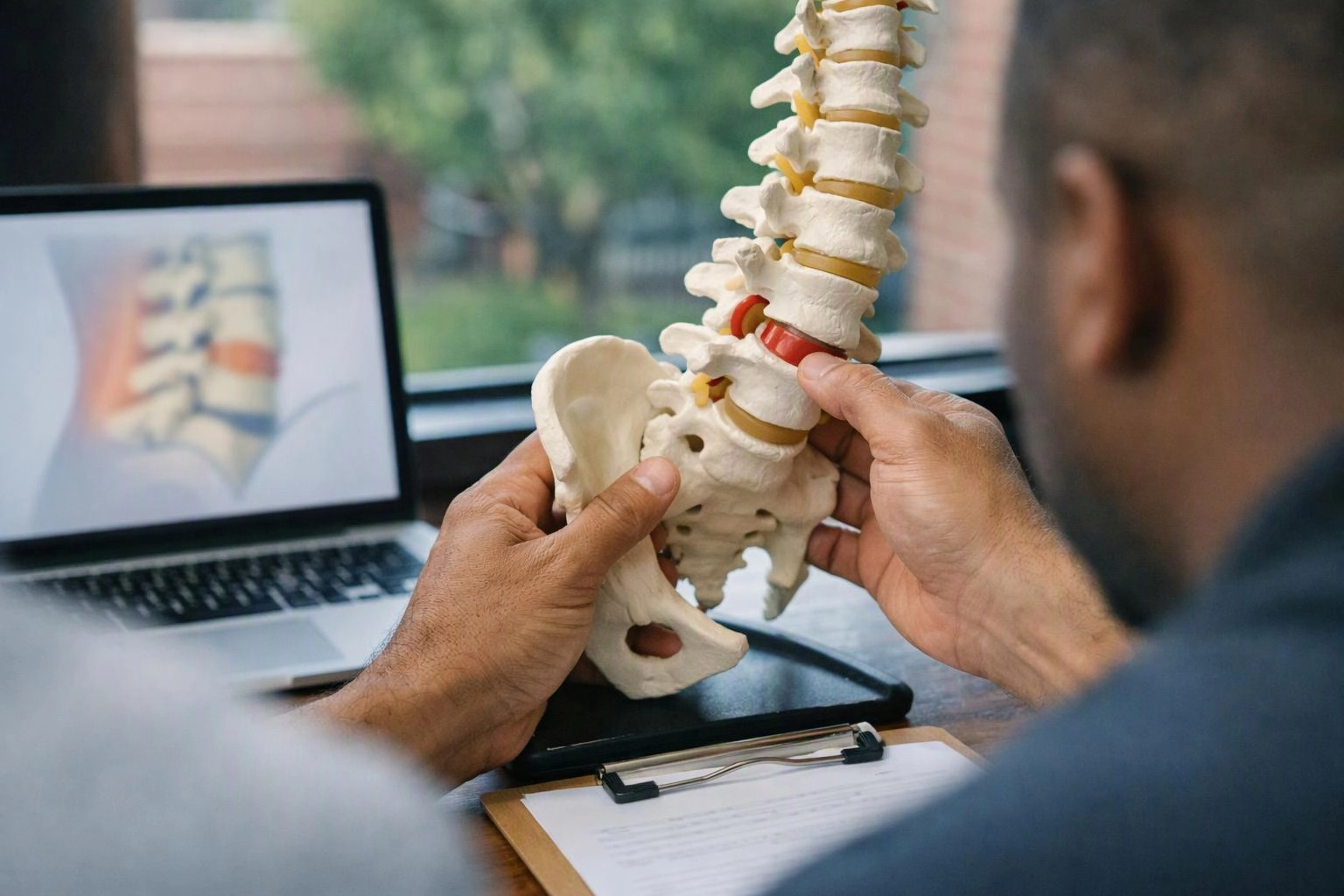
From the Arrowhead Clinic Chiropractor Atlanta team
When we assess spondylolisthesis during Back Pain Treatment, we review movement, posture, muscle control, and reported symptoms together. We also consider whether the presentation suggests nerve involvement or another source of back pain. Our findings guide the scope and pace of conservative care.
Spondylolisthesis in Practice: A Real-World Example
A person with lower-back pain may notice symptoms during standing, walking, or bending. During Back Pain Treatment, the clinical picture may lead the team to consider spondylolisthesis alongside movement findings and any available imaging.
Related Services
Related Terms
Lumbar Spine
The lumbar spine is the lower section of the vertebral column between the thoracic spine and…
Spinal Stenosis
Spinal Stenosis is a narrowing of the spaces within the spine that can reduce room for…
Nerve Root Compression
Nerve Root Compression is pressure on a spinal nerve root where the nerve leaves the spinal…
Range of Motion
Range of Motion is the available movement at a joint or body region. It describes how…
Arrowhead Clinic Chiropractor Atlanta
Have Questions About Spondylolisthesis?
Contact Arrowhead Clinic Chiropractor Atlanta for practical guidance on Spondylolisthesis and related chiropractor work in Atlanta.