
What Is Nerve Root Compression?
Nerve Root Compression is a condition in which pressure affects a spinal nerve root as it leaves the spine. The pressure may involve a disc, narrowed opening, arthritic change, or nearby tissue. Symptoms can follow the nerve’s pathway and may include pain, tingling, numbness, or weakness in an arm or leg.
Quick Facts About Nerve Root Compression
Category
Spinal nerve condition
Used for
Assessing radiating nerve symptoms
Common confusion
Not every pinched nerve involves a nerve root
Also called
Nerve Compression
Often discussed with
Pinched Nerve Treatment, Spinal Decompression Therapy
Key Takeaways About Nerve Root Compression
- Pressure occurs near a spinal nerve root.
- Symptoms may travel beyond the spine.
- A pinched nerve is not always nerve root compression.
How Nerve Root Compression Works
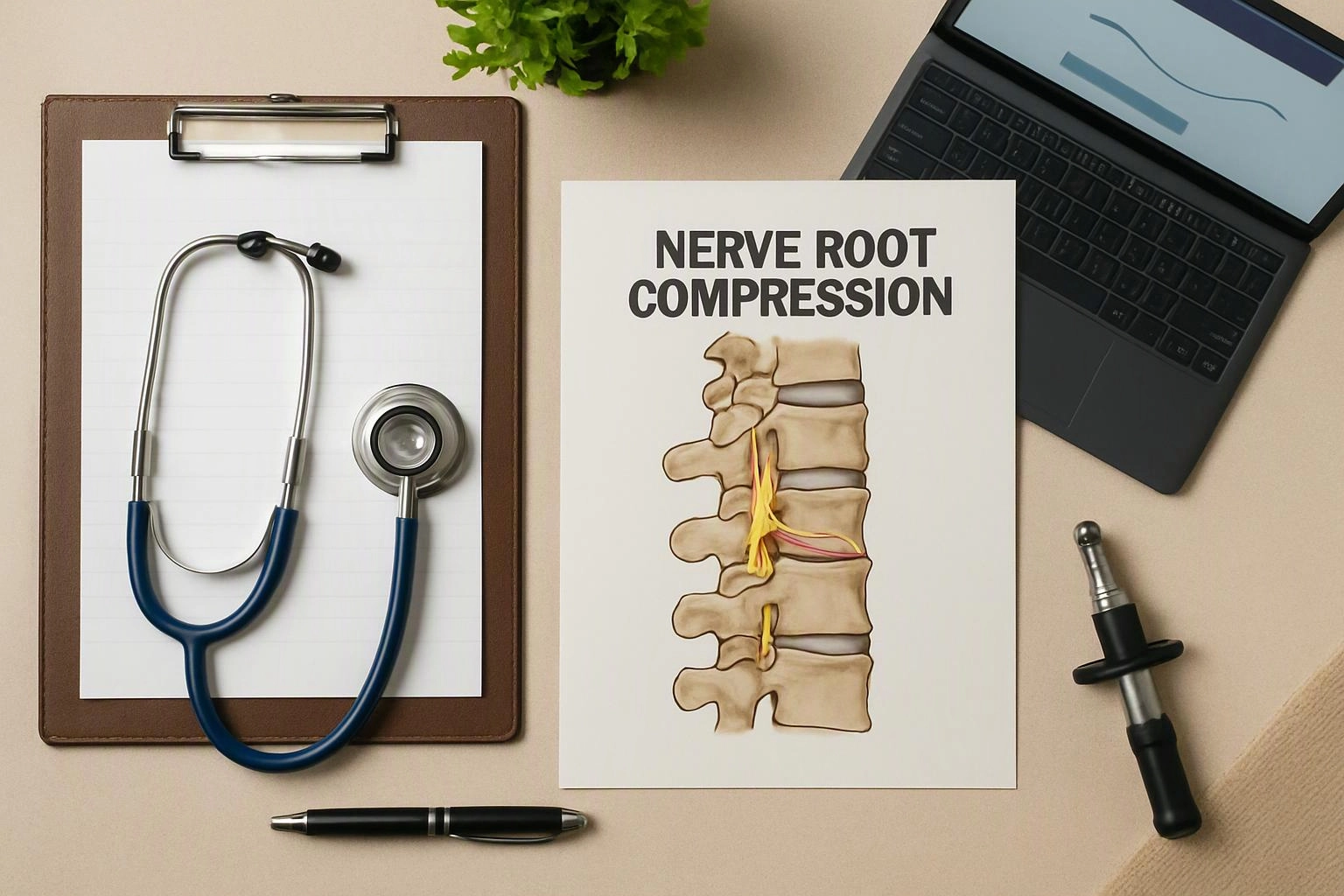
Nerve Root Compression works by placing pressure on a nerve root close to its exit from the spine. A disc change, reduced space, joint change, or surrounding tissue may narrow that passage. The affected nerve can then send altered signals along its route.
Related glossary terms: Disc Herniation, Disc Bulge, Foraminal Stenosis.
A clinical assessment connects the symptom pattern with spinal movement, strength, sensation, and reflex findings. Imaging may show a structural change, but an image alone does not establish how symptoms function. Foraminal Stenosis describes narrowing in an opening where a nerve passes. Disc Herniation describes disc material extending beyond its usual boundary. Either condition may relate to nerve root pressure, depending on location and effect.
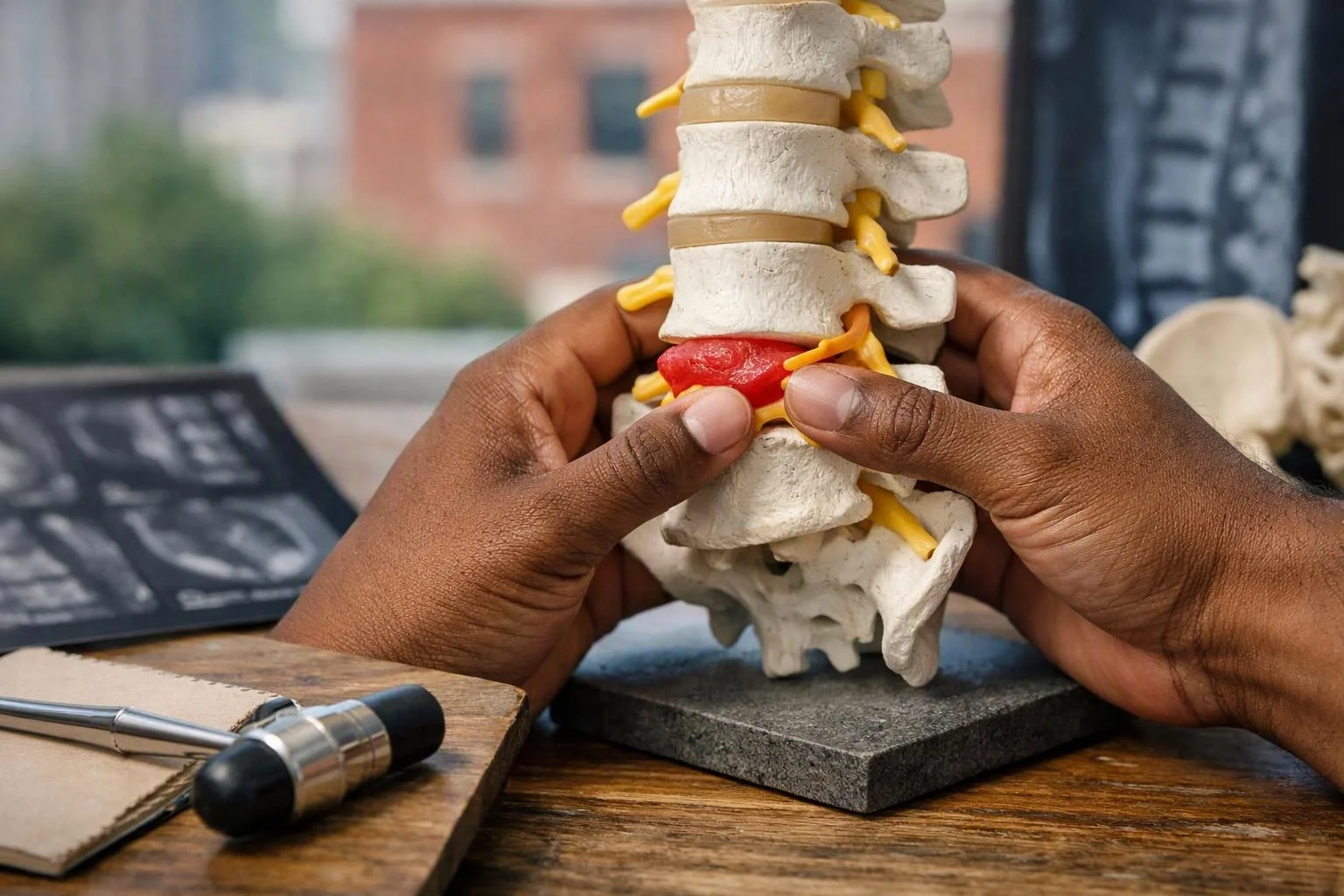
From the Arrowhead Clinic Chiropractor Atlanta team
When we assess nerve root compression, we review the symptom pattern and examine movement, strength, sensation, and reflex responses. We also consider whether the findings fit the suspected spinal level. For Pinched Nerve Treatment, our team uses that information to guide the clinical approach and track changes over time.
Nerve Root Compression in Practice: A Real-World Example
A person with a lower-back disc change may feel pain or tingling that travels into the buttock and leg. During Pinched Nerve Treatment, the clinician relates that pattern to examination findings before choosing an approach.
Related Terms
Disc Herniation
Disc Herniation is a spinal condition that occurs when the soft inner material of an intervertebral…
Disc Bulge
A disc bulge is a condition in which the outer portion of a spinal disc extends…
Foraminal Stenosis
Foraminal Stenosis is a narrowing of the openings between spinal bones where nerve roots leave the…
Spinal Stenosis
Spinal stenosis is a narrowing of the spaces within the spine that can reduce room for…
Arrowhead Clinic Chiropractor Atlanta
Have Questions About Nerve Root Compression?
Contact Arrowhead Clinic Chiropractor Atlanta for practical guidance on Nerve Root Compression and related chiropractor work in Atlanta.