
What Is Disc Herniation?
Disc Herniation is a spinal condition that occurs when the soft inner material of an intervertebral disc pushes through a weakened or torn outer layer. The displaced material may irritate nearby nerves, which can produce localized pain, numbness, tingling, or weakness. Symptoms depend on the disc’s location and the affected nerve.
Quick Facts About Disc Herniation
Category
Spinal disc condition
Used for
Describing disc-related nerve irritation
Common confusion
Disc bulge and disc herniation are not identical
Also called
Herniated Disc, Slipped Disc
Often discussed with
Herniated Disc Treatment, Spinal Decompression Therapy
Key Takeaways About Disc Herniation
- A herniation involves displaced inner disc material.
- Symptoms vary according to location and nerve involvement.
- A disc bulge is not always a disc herniation.
How Disc Herniation Works
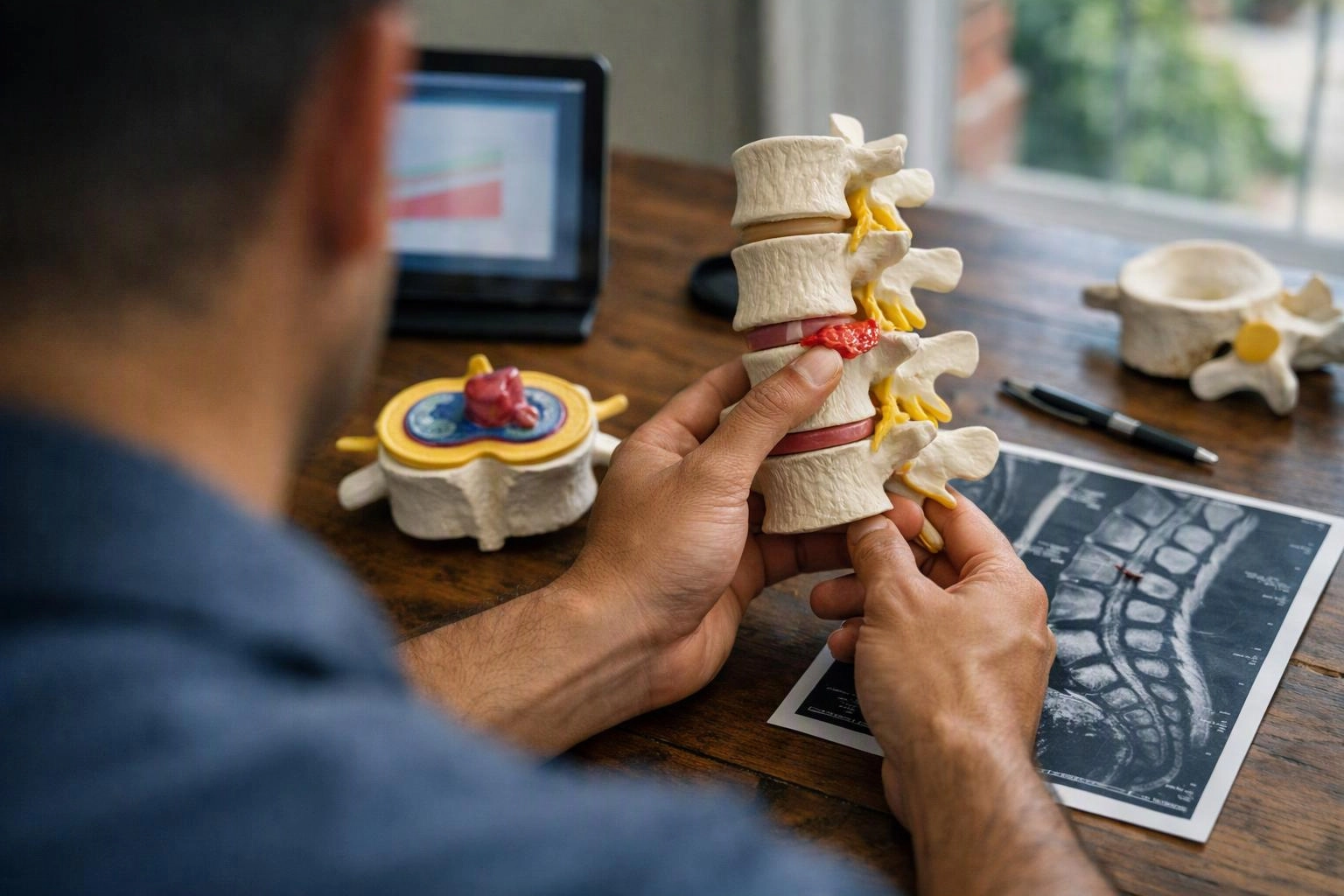
Disc herniation develops when the firm outer ring of a spinal disc develops a tear or weak area, allowing softer inner material to extend outward. The change may occur in the neck or lower back. A herniated disc may remain localized, or the displaced material may contact a nearby nerve root.
Related glossary terms: Disc Bulge, Nerve Root Compression, Lumbar Spine.
Clinicians consider the disc’s location, the pattern of symptoms, and findings from a physical examination when discussing its practical meaning. Nerve root compression may help explain pain, tingling, numbness, or weakness that follows a particular path through an arm or leg. Spinal manipulation is a separate treatment term, so it does not describe the disc condition itself. Imaging may provide added detail when a qualified clinician considers it appropriate.
From the Arrowhead Clinic Chiropractor Atlanta team
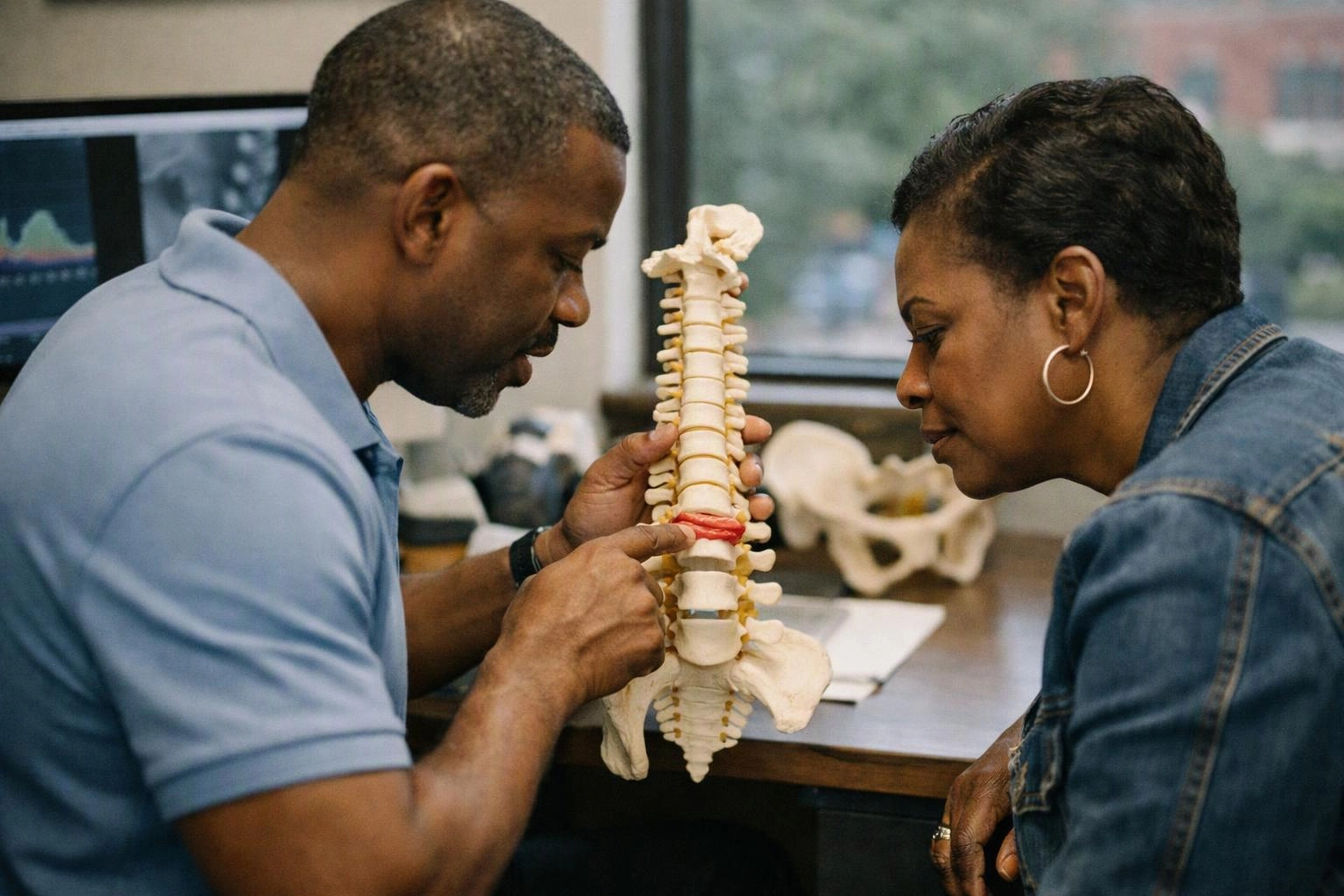
When we assess a suspected disc herniation, we review the symptom pattern, spinal movement, and possible nerve involvement. We use those findings to guide the evaluation and determine whether the presentation fits our Herniated Disc Treatment service. Our approach focuses on the person’s current function and response to care.
Disc Herniation in Practice: A Real-World Example
A person may develop lower back pain after lifting and later notice tingling that travels into the leg. A clinician may evaluate the symptom pattern and movement limits for signs that a lumbar disc herniation could be affecting a nearby nerve.
Related Terms
Disc Bulge
A disc bulge is a condition in which the outer portion of a spinal disc extends…
Nerve Root Compression
Nerve Root Compression is a condition in which pressure affects a spinal nerve root as it…
Lumbar Spine
Lumbar Spine is the lower section of the vertebral column between the thoracic spine and pelvis…
Spinal Stenosis
Spinal stenosis is a narrowing of the spaces within the spine that can reduce room for…
Arrowhead Clinic Chiropractor Atlanta
Have Questions About Disc Herniation?
Contact Arrowhead Clinic Chiropractor Atlanta for practical guidance on Disc Herniation and related chiropractor work in Atlanta.