
What Is Spinal Stenosis?
Spinal stenosis is a narrowing of the spaces within the spine that can reduce room for the spinal cord or nerve roots. The narrowing may develop from age-related joint changes, disc changes, thickened ligaments, or spinal shape changes. Symptoms can include back pain, leg discomfort, numbness, weakness, or changes in walking.
Quick Facts About Spinal Stenosis
Category
Spinal condition
Used for
Understanding nerve-related back and leg symptoms
Common confusion
Not identical to disc herniation
Also called
Narrow Spinal Canal, Spinal canal narrowing
Often discussed with
Sciatica Treatment, Spinal Decompression Therapy
Key Takeaways About Spinal Stenosis
- Narrowed spinal spaces distinguish stenosis from general back pain.
- Symptoms may change with posture, walking, or standing.
- Spinal stenosis is not the same as a herniated disc.
How Spinal Stenosis Works
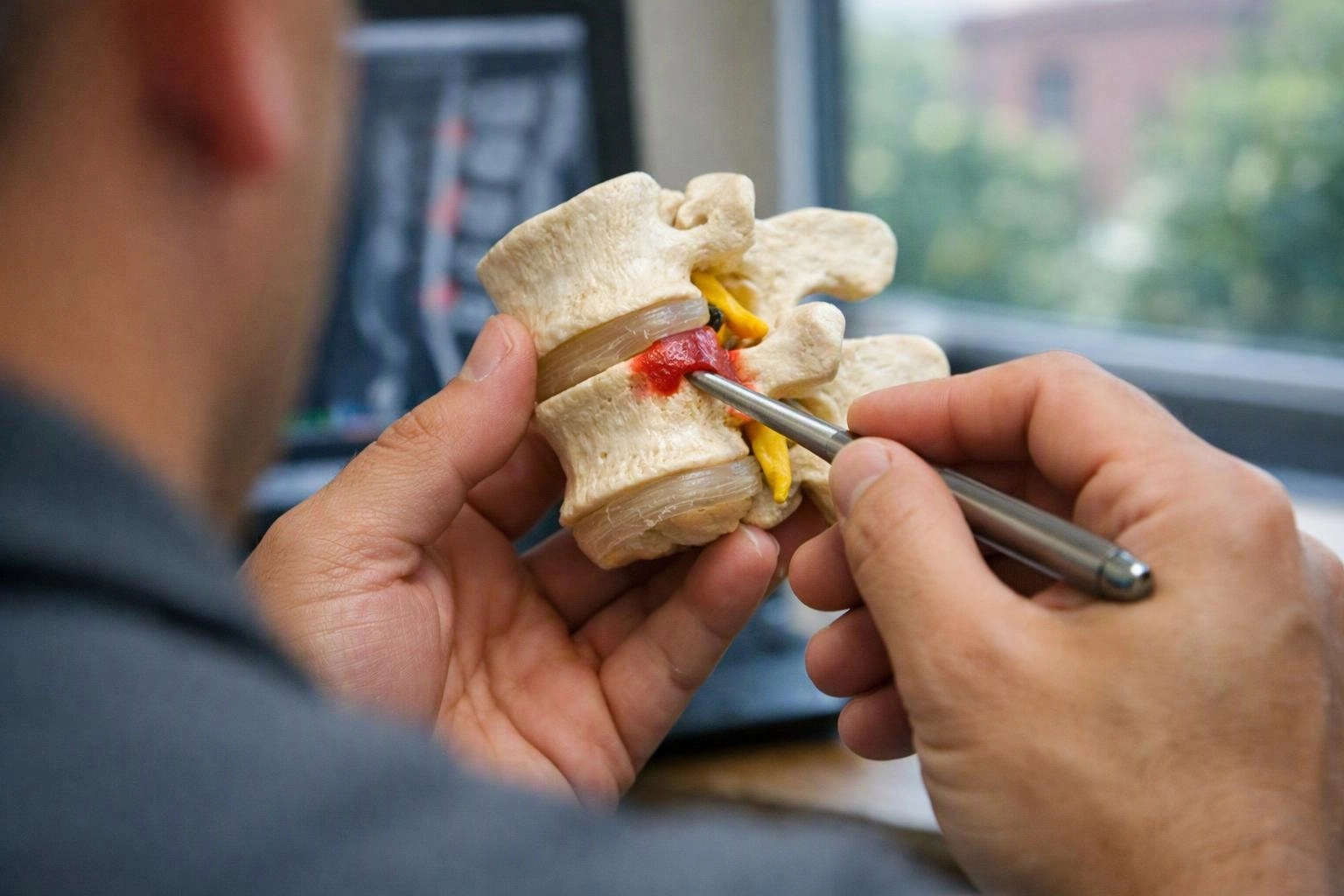
Spinal stenosis develops when changes in the vertebrae, discs, joints, or ligaments reduce the open space around neural tissue. The affected area may involve the neck or lower back. Pressure or irritation around a nerve can produce pain, tingling, numbness, or weakness that follows a regional pattern.
Related glossary terms: Foraminal Stenosis, Lumbar Spine, Nerve Root Compression.
Symptoms do not always match the amount of narrowing seen on an image. Body position can also influence symptoms because bending, standing, or walking may change the available space. A lumbar spine assessment considers movement, strength, sensation, reflexes, and symptom patterns. Providers may also review imaging when the clinical picture calls for more detail. Nerve root compression describes one possible effect of stenosis, not a separate cause in every case.
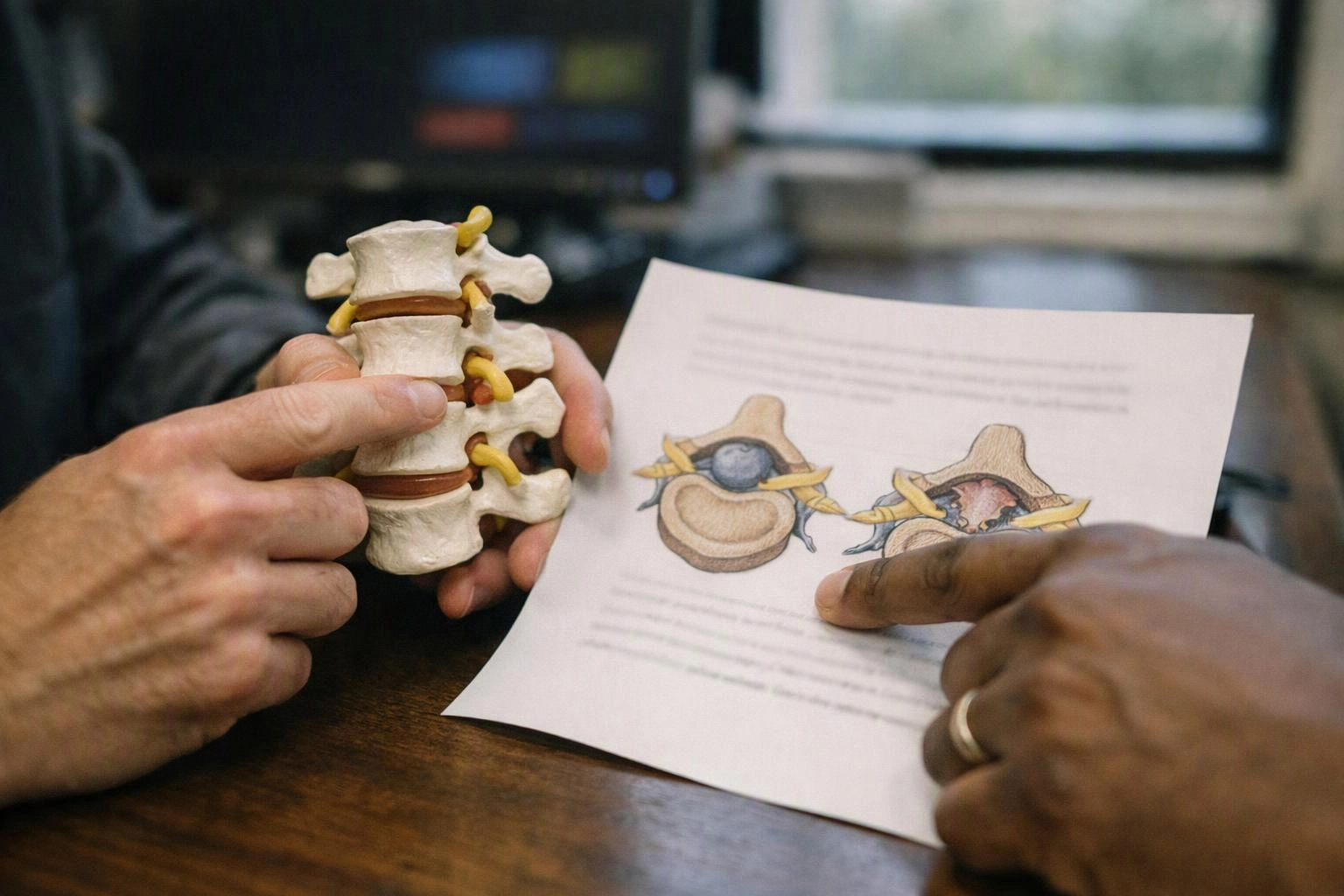
From the Arrowhead Clinic Chiropractor Atlanta team
When we assess spinal stenosis during Sciatica Treatment, we connect the symptom pattern with movement findings and the person’s functional limits. We look for signs that suggest nerve involvement and consider whether the presentation fits a mechanical source. Our care planning accounts for irritability, mobility, and response to examination procedures.
Spinal Stenosis in Practice: A Real-World Example
A person with lumbar spinal stenosis may feel aching or tingling through the buttock and leg after standing or walking. Symptoms may ease when the person changes position, although the pattern varies with the affected spinal area.
Related Services
Related Terms
Foraminal Stenosis
Foraminal Stenosis is a narrowing of the openings between spinal bones where nerve roots leave the…
Lumbar Spine
Lumbar Spine is the lower section of the vertebral column between the thoracic spine and pelvis…
Nerve Root Compression
Nerve Root Compression is a condition in which pressure affects a spinal nerve root as it…
Disc Herniation
Disc Herniation is a spinal condition that occurs when the soft inner material of an intervertebral…
Arrowhead Clinic Chiropractor Atlanta
Have Questions About Spinal Stenosis?
Contact Arrowhead Clinic Chiropractor Atlanta for practical guidance on Spinal Stenosis and related chiropractor work in Atlanta.