
What Is Foraminal Stenosis?
Foraminal Stenosis is a narrowing of the openings between spinal bones where nerve roots leave the spinal canal. The narrowing may reduce available space around a nerve root and contribute to pain, tingling, numbness, or weakness along the affected nerve pathway. Degenerative joint changes, disc changes, or bone growth can reduce this space.
Quick Facts About Foraminal Stenosis
Category
Spinal nerve-root condition
Used for
Describing reduced space around an exiting nerve
Common confusion
Often confused with central spinal stenosis
Also called
Neural Foraminal Stenosis, Foraminal narrowing
Often discussed with
Pinched Nerve Treatment, Spinal Decompression Therapy
Key Takeaways About Foraminal Stenosis
- The narrowing occurs at a nerve exit opening.
- Symptoms may follow the affected nerve’s pathway.
- Foraminal stenosis is not the same as central spinal stenosis.
How Foraminal Stenosis Works
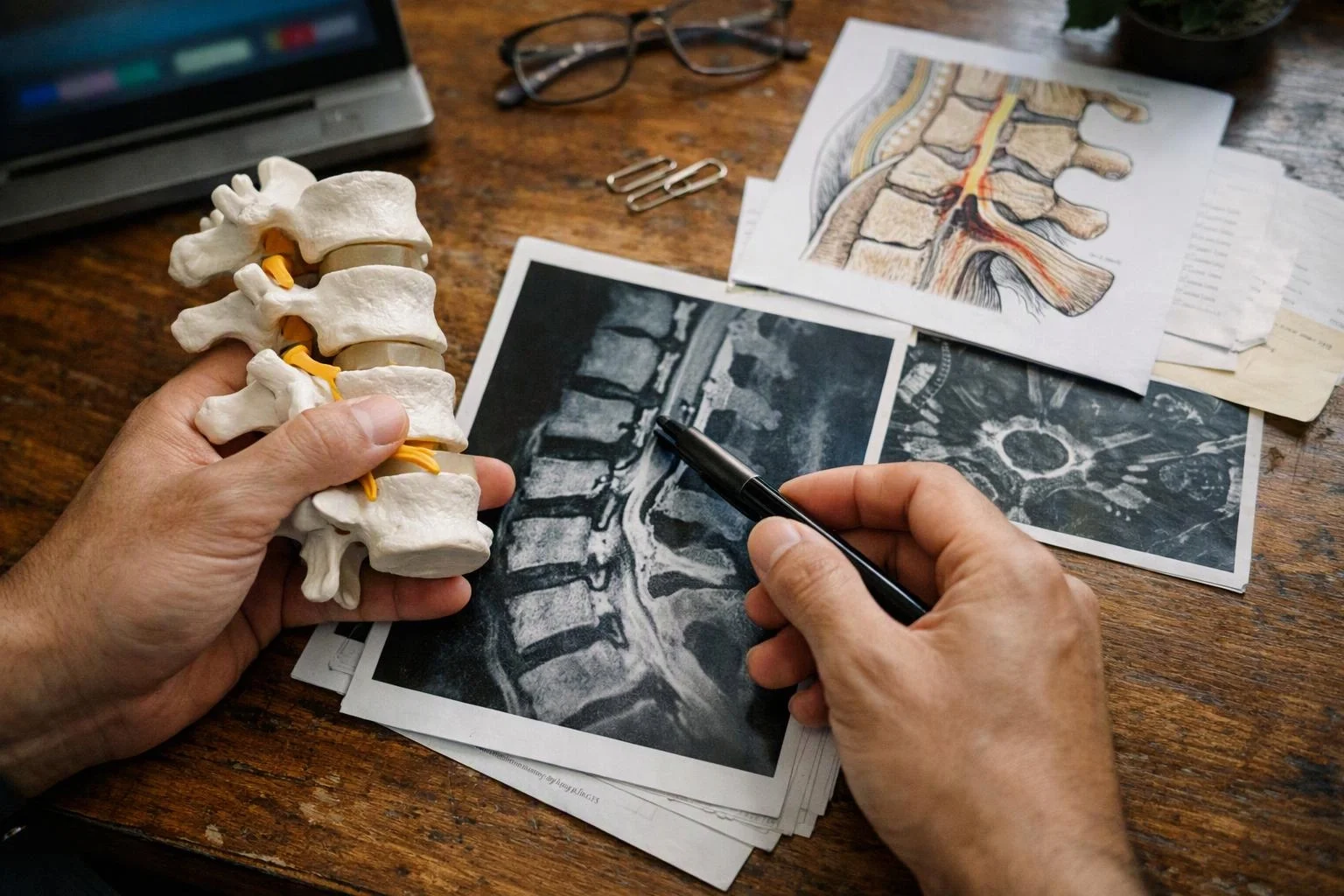
Foraminal Stenosis describes reduced space in a foramen, the side opening formed by neighboring spinal bones. A nerve root passes through each opening as it leaves the spinal canal. Disc height loss, arthritic joint changes, or bone overgrowth may reduce the opening and place pressure near the nerve.
Related glossary terms: Nerve Root Compression, Spinal Stenosis, Lumbar Spine.
Symptoms depend on the location and degree of narrowing. Neck involvement may affect the shoulder, arm, or hand, while lower-back involvement may affect the hip, leg, or foot. Clinicians connect reported symptoms with movement, strength, sensation, and relevant imaging findings. Nerve Root Compression describes the pressure affecting the nerve, while Spinal Stenosis is a broader term for narrowed space within or around the spine.
From the Arrowhead Clinic Chiropractor Atlanta team
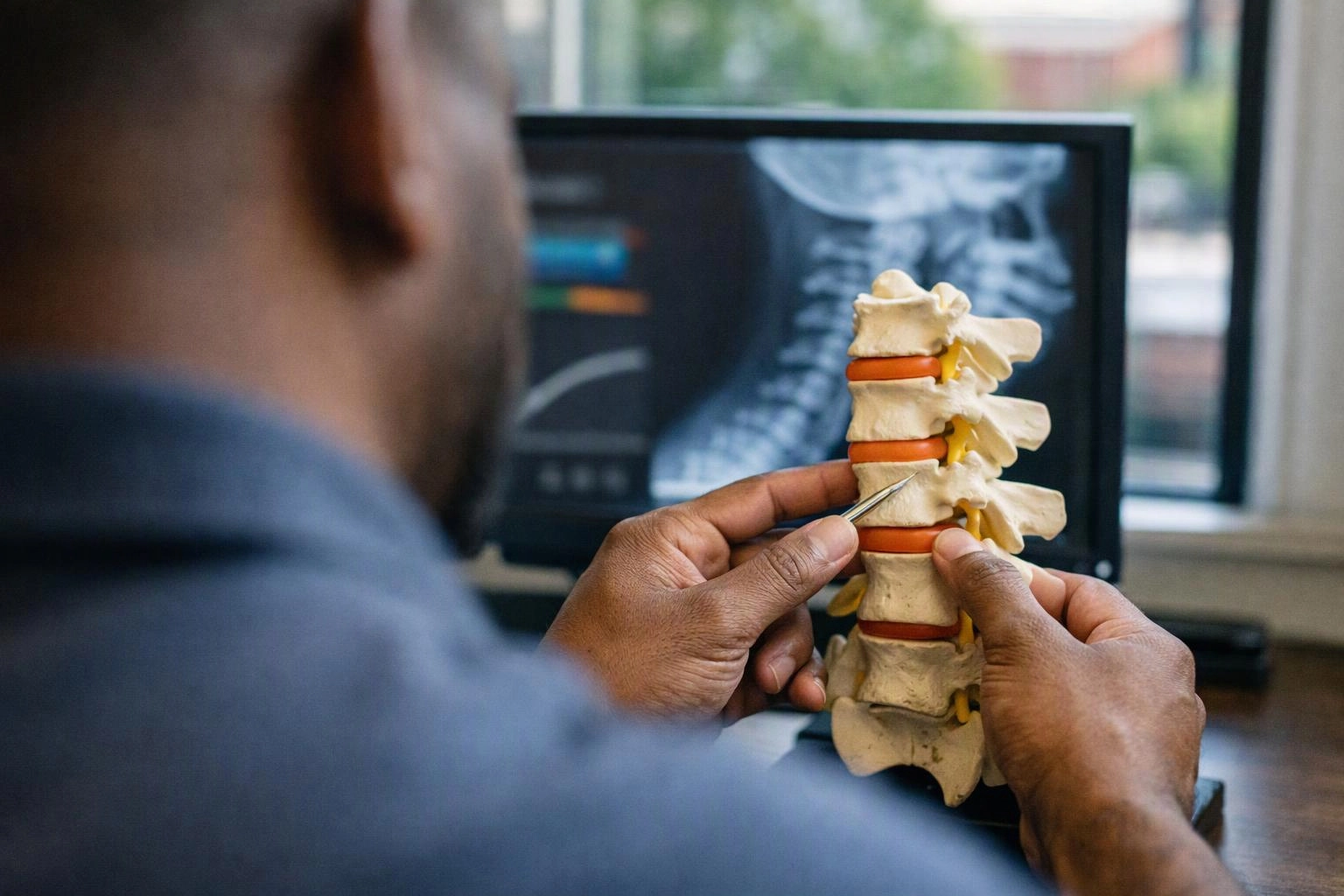
When we assess Foraminal Stenosis during Pinched Nerve Treatment, we relate the reported symptoms to spinal movement, posture, strength, and sensation. We also consider whether the pattern fits an exiting nerve root before choosing hands-on care or corrective exercises.
Foraminal Stenosis in Practice: A Real-World Example
A person with lower-back foraminal stenosis may feel aching or tingling that travels from the back toward the leg. During Pinched Nerve Treatment, the care plan may address spinal motion and surrounding muscle control based on the examination findings.
Related Terms
Nerve Root Compression
Nerve Root Compression is a condition in which pressure affects a spinal nerve root as it…
Spinal Stenosis
Spinal stenosis is a narrowing of the spaces within the spine that can reduce room for…
Lumbar Spine
Lumbar Spine is the lower section of the vertebral column between the thoracic spine and pelvis…
Cervical Lordosis
Cervical Lordosis is the natural inward curve of the neck portion of the spine. This curve…
Arrowhead Clinic Chiropractor Atlanta
Have Questions About Foraminal Stenosis?
Contact Arrowhead Clinic Chiropractor Atlanta for practical guidance on Foraminal Stenosis and related chiropractor work in Atlanta.