
What Is Cervical Lordosis?
Cervical Lordosis is the natural inward curve of the neck portion of the spine. This curve helps the head stay balanced over the shoulders and supports normal movement through the cervical vertebrae. A reduced, increased, or reversed curve may appear with posture changes, muscle tension, injury, or structural conditions.
Quick Facts About Cervical Lordosis
Category
Spinal alignment feature
Used for
Describing neck posture and spinal shape
Common confusion
Not every curve change causes symptoms
Also called
Neck Curve, Cervical spinal curve
Often discussed with
Neck Pain Treatment, Posture Correction
Key Takeaways About Cervical Lordosis
- The curve appears in the cervical spine, not the lower back.
- Posture and muscle tension can influence how the curve appears.
- Cervical lordosis is not the same as neck pain.
How Cervical Lordosis Works
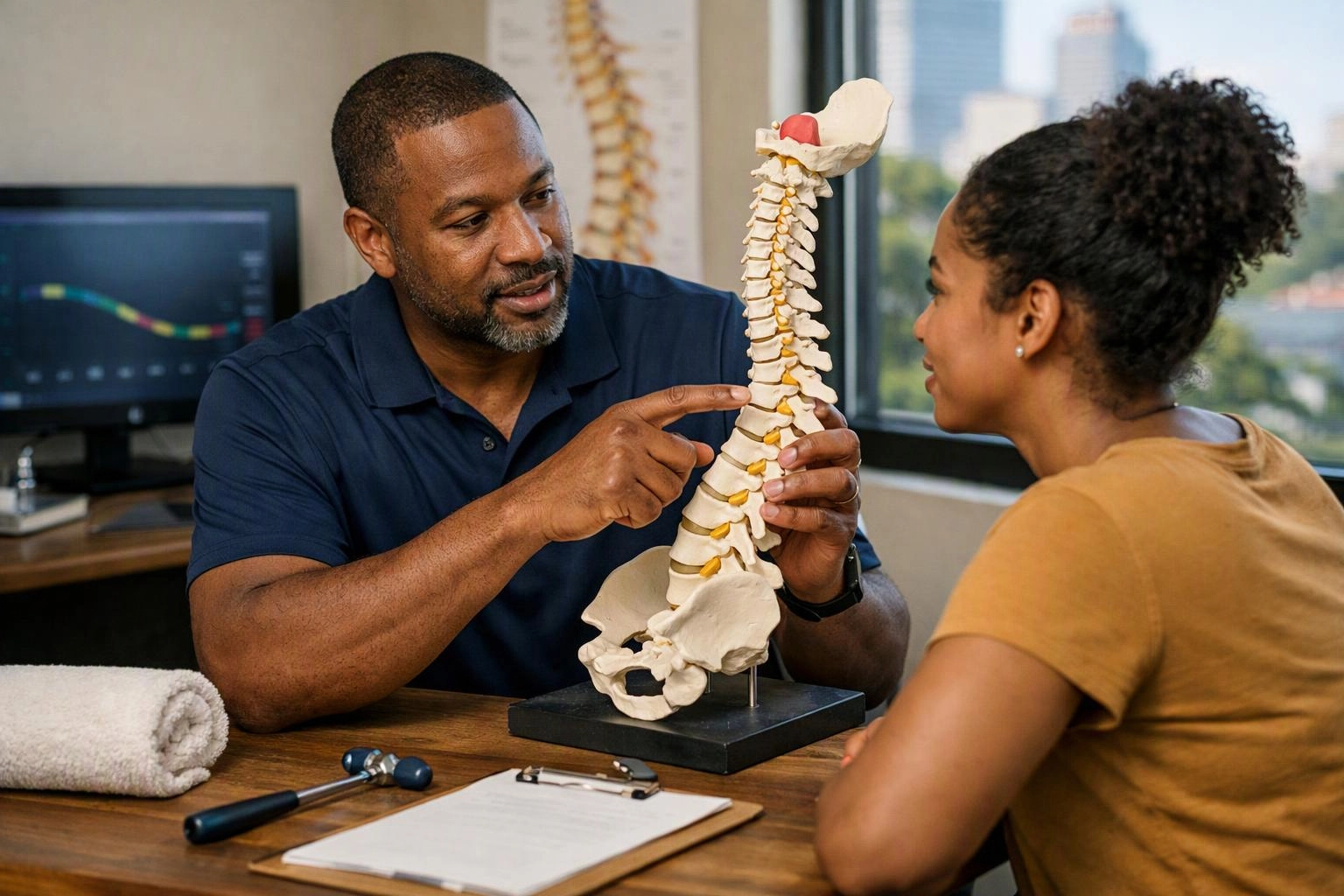
Cervical lordosis describes how the neck vertebrae align in relation to the head and upper back. The inward curve helps distribute load during activities such as sitting, walking, and turning the head. Neck muscles and surrounding joints contribute to control of this region.
Related glossary terms: Range of Motion, Spinal Manipulation, Facet Joint.
Clinicians assess the curve through posture observation, movement testing, and, when appropriate, medical imaging. A report may describe the curve as maintained, reduced, increased, or reversed. These terms describe alignment findings. They do not identify the source of pain by themselves. Range of motion and muscle behavior provide additional context during a neck pain assessment.
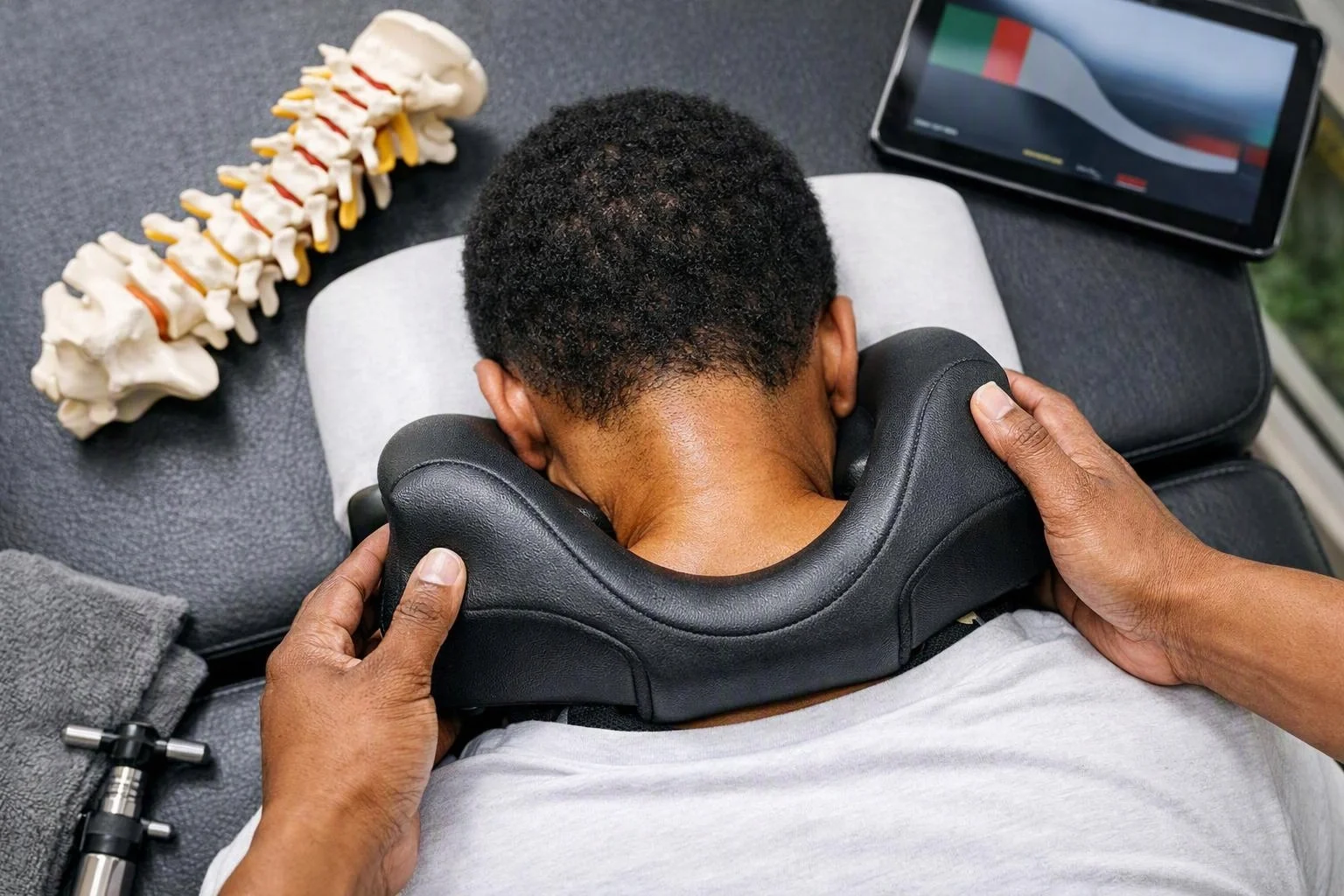
From the Arrowhead Clinic Chiropractor Atlanta team
When we assess cervical lordosis during neck pain treatment, we consider posture, neck movement, and muscle tension together. We use the finding as one part of the clinical picture, since a curve description alone does not explain every symptom or determine the right care plan.
Cervical Lordosis in Practice: A Real-World Example
A person who spends long periods looking down may show a reduced cervical curve during a posture assessment. The clinician also checks neck movement and muscle tension before connecting the finding with the person’s neck pain treatment plan.
Related Services
Related Terms
Range of Motion
Range of Motion is the movement available at a joint or across a body region. It…
Spinal Manipulation
Spinal Manipulation is a hands-on technique that applies a controlled force to a spinal joint to…
Facet Joint
A facet joint is a small synovial joint between neighboring vertebrae that guides spinal movement and…
Muscle Spasm
A muscle spasm is a sudden, involuntary tightening of muscle tissue that can cause pain, stiffness…
Arrowhead Clinic Chiropractor Atlanta
Have Questions About Cervical Lordosis?
Contact Arrowhead Clinic Chiropractor Atlanta for practical guidance on Cervical Lordosis and related chiropractor work in Atlanta.