Shockwave Therapy for Plantar Fasciitis: How It Fits Into Care
Shockwave therapy for plantar fasciitis is a noninvasive treatment option that may support a broader chiropractic care plan when heel pain persists. Arrowhead Clinic Chiropractor Atlanta evaluates the foot, symptoms, contributing mechanics, and overall goals before deciding whether shockwave therapy fits.
Request an Estimate
How Shockwave Therapy Fits Into Plantar Fasciitis Care
Shockwave therapy fits into plantar fasciitis care as one treatment option within an individualized plan that also considers foot mechanics, activity demands, and symptom behavior.
Plantar fasciitis involves irritation or sensitivity around the plantar fascia, the band of tissue that supports the arch. Heel pain can also relate to walking patterns, ankle motion, calf tightness, or activity changes.
Our chiropractic care approach connects symptom-focused treatment with a clinical assessment of the foot and lower limb. We may use shockwave treatment alongside movement guidance, supportive footwear advice, stretching, strengthening, and home exercises when those steps match your care goals.
When Might Shockwave Therapy Be Considered for Heel Pain?
Shockwave therapy may be considered when plantar fascia-related heel pain continues, limits activity, or does not respond adequately to an appropriate conservative care plan.
Our team reviews the pattern of your symptoms before recommending care. Relevant signs may include:
These factors do not determine treatment suitability on their own. We also consider other possible sources of heel pain and whether the treatment fits your overall plan.
How Shockwave Therapy and Plantar Fasciitis Treatment Work Together
Shockwave therapy and plantar fasciitis treatment work together when assessment, symptom-focused treatment, movement guidance, and home care address different parts of the same heel-pain problem.
We may combine the services when:
The two services may work together in several ways:
What Does Shockwave Therapy Feel Like?
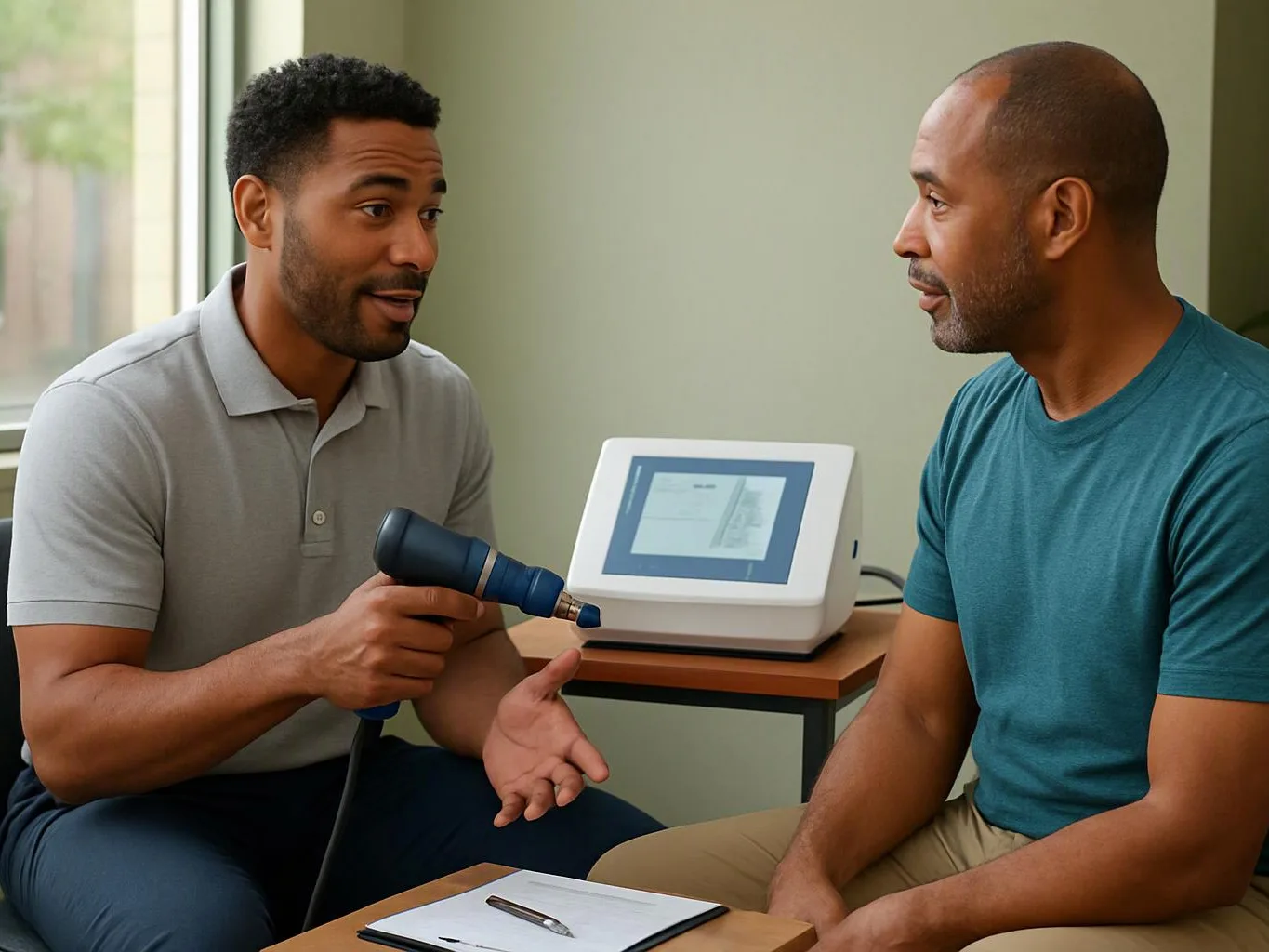
Shockwave therapy can feel like repeated tapping or pulsing over the treatment area, and our team adjusts the approach according to comfort and clinical findings.
Heel sensitivity can make the treatment sensation feel stronger over tender areas. We monitor your response and adjust contact, positioning, or treatment intensity when appropriate.
Tell us how the treatment feels during the session. Your feedback helps us keep the approach connected to both comfort and the clinical goal.
Is Shockwave Therapy Safe for Plantar Fasciitis?
Shockwave therapy can be appropriate for some people with plantar fasciitis, but our team reviews symptoms, health history, medications, and treatment suitability before proceeding.
Our plantar fasciitis assessment looks for factors that may affect care, including the location of pain, skin or tissue concerns, health conditions, and possible contraindications. We also consider whether another evaluation is needed when symptoms do not match a typical plantar fascia pattern.
Safety depends on selecting the right person, treatment area, and approach. We explain the expected treatment sensation and any relevant care instructions before beginning.
How We Assess Whether Shockwave Therapy Fits Your Care Plan
Arrowhead Clinic Chiropractor Atlanta uses a step-by-step clinical assessment to connect your symptoms with your movement patterns, treatment goals, and available care options.
This process helps us choose care based on your presentation rather than treating heel pain as a single, uniform condition.
What Shapes the Cost of a Shockwave Therapy Care Plan?
The cost of a shockwave therapy care plan depends on the assessment findings, the services included, and the treatment approach selected; we explain what the quote covers before care begins.
Factors may include the scope of the clinical assessment, the areas that need attention, the role of home care, and whether the plan includes movement guidance or related plantar fasciitis treatment. A focused plan and a broader plan can have different needs.
We provide Free Consultations so we can discuss your symptoms, care goals, and suitable options. Contact us for an exact quote that reflects the care plan we recommend.
What Should You Ask Before Starting Shockwave Therapy?
A shockwave therapy consultation should clarify your treatment goals, expected sensations, care coordination, and home instructions before you begin.
Useful questions include whether your symptoms fit plantar fascia-related heel pain, what findings support treatment suitability, and how foot and ankle mechanics may affect your care plan.
You can also ask how we will monitor symptom response, which activities may need adjustment, and what home exercises or supportive footwear guidance may support your progress.
Our guide, Chiropractic Care and Corrective Exercise: How They Can Work Together, may also help explain how movement-focused care can support a broader plan.
Questions About Shockwave Therapy for Plantar Fasciitis
Can shockwave therapy help chronic plantar fasciitis?
Shockwave therapy may help some people with persistent plantar fasciitis, and Arrowhead Clinic Chiropractor Atlanta first checks whether the symptoms, examination findings, and care goals support its use.
Can I walk after shockwave therapy for plantar fasciitis?
Walking after shockwave therapy depends on your symptoms, treatment response, and the guidance included in your care plan.
What happens if plantar fasciitis symptoms do not improve with shockwave therapy?
If plantar fasciitis symptoms do not improve with shockwave therapy, we reassess the diagnosis, foot mechanics, activity demands, and treatment plan to determine the next appropriate step.
Contact Arrowhead Clinic Chiropractor Atlanta to discuss your heel pain, treatment goals, and whether shockwave therapy fits your care plan.
Get a Free Estimate