
What Is Proprioception?
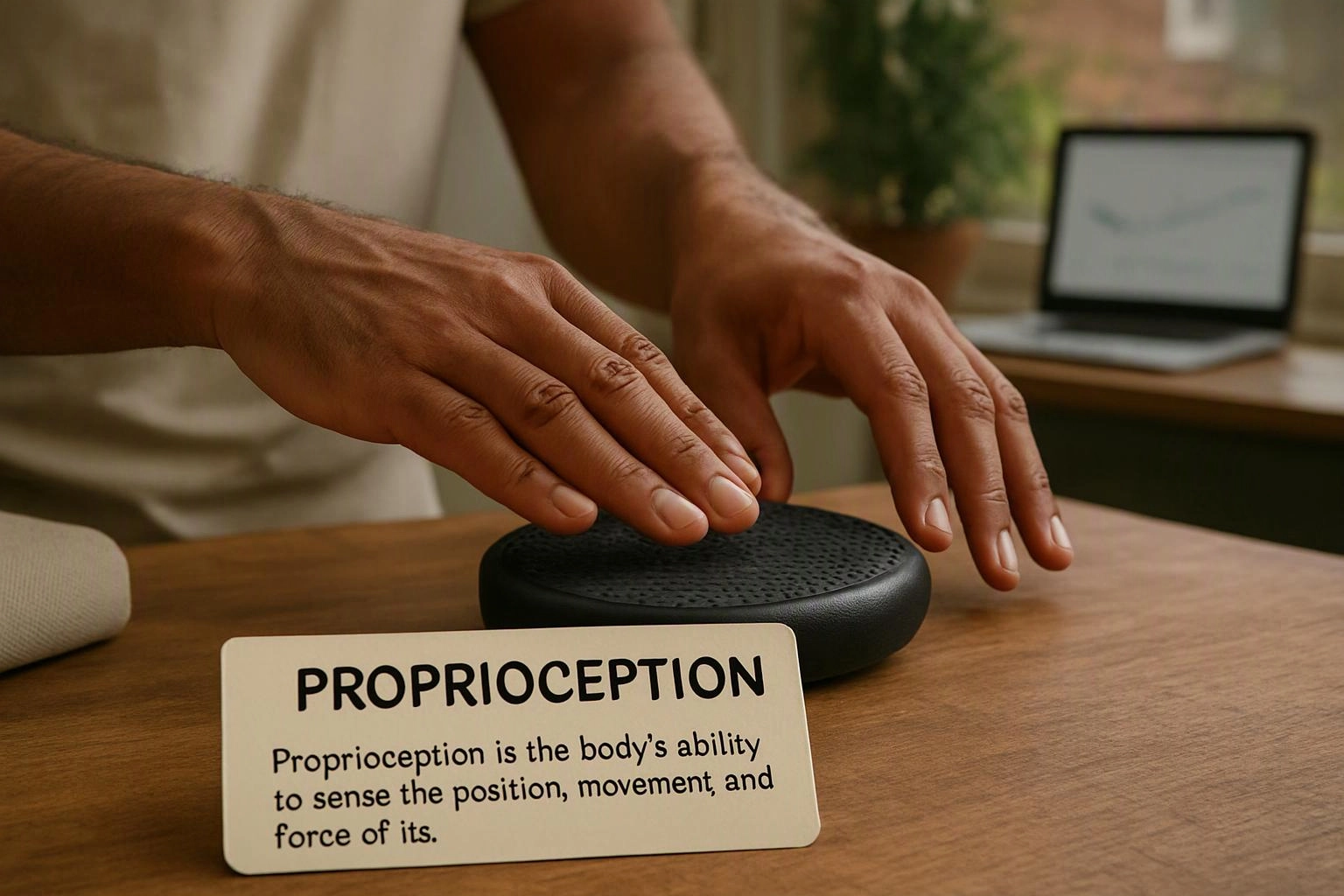
Proprioception is the body's ability to sense the position, movement, and force of its joints and muscles without relying on vision. Signals from receptors in muscles, tendons, ligaments, and joints help the nervous system guide balance, coordination, posture, and controlled movement during activities such as walking, lifting, or exercise.
Quick Facts About Proprioception
Category
Sensory and movement function
Used for
Balance, coordination, and body control
Common confusion
It is different from flexibility and strength
Also called
Body Position Sense, Kinesthesia
Often discussed with
Corrective Exercise Therapy
Key Takeaways About Proprioception
- Proprioception works through internal body signals, not sight alone.
- Exercise can challenge position sense, balance, and movement control.
- Proprioception is not the same as flexibility or muscle strength.
How Proprioception Works
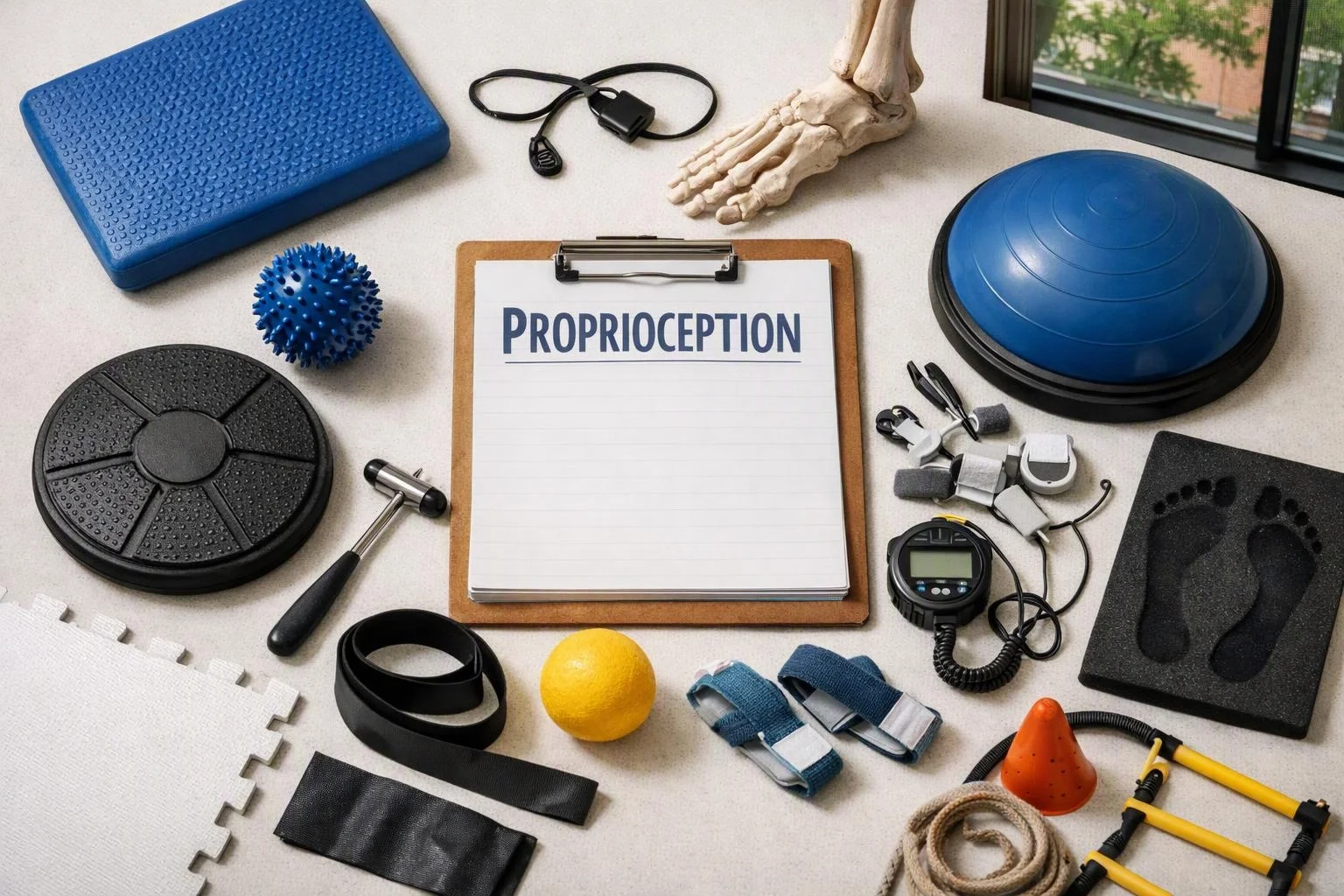
Proprioception begins when sensory receptors detect changes in muscle length, tendon tension, and joint position. Those signals travel through the nervous system and help the brain adjust movement without requiring constant visual checks. A person can close their eyes and still sense whether an arm is bent or a foot is planted.
Related glossary terms: Core Stabilization, Gait Analysis, Range of Motion.
Corrective exercise therapy may test this function through controlled movements, balance tasks, and changes in body position. The goal is to observe how well the body detects a shift and responds with accurate control. Balance training can add a stable or changing surface, while motor control exercises focus on smooth, deliberate movement. These tasks help distinguish a position-sensing issue from limited strength or range of motion.
From the Arrowhead Clinic Chiropractor Atlanta team
When we apply Corrective Exercise Therapy, we watch how a person controls joint position during slow, purposeful movements. We may change the task or surface to see whether balance and coordination remain consistent. Our team connects these observations with movement quality, not with a single exercise result.
Proprioception in Practice: A Real-World Example
During a Corrective Exercise Therapy session, a person may stand on one leg while keeping the pelvis level and the knee aligned. The exercise challenges proprioception because the person must sense joint position and correct small shifts without watching the leg.
Related Services
Related Terms
Core Stabilization
Core Stabilization is a corrective exercise approach that trains the muscles around the abdomen, pelvis, and…
Gait Analysis
A gait analysis is a structured assessment of how you walk or run. The assessment examines…
Range of Motion
Range of Motion is the movement available at a joint or across a body region. It…
Patellar Tracking
Patellar Tracking is the path the kneecap follows as the knee bends and straightens. Smooth tracking…
Arrowhead Clinic Chiropractor Atlanta
Have Questions About Proprioception?
Contact Arrowhead Clinic Chiropractor Atlanta for practical guidance on Proprioception and related chiropractor work in Atlanta.