
What Is Patellar Tracking?
Patellar Tracking is the path the kneecap follows as the knee bends and straightens. Smooth tracking keeps the patella aligned within the femoral groove and supports efficient movement. Changes in muscle control, joint motion, or leg alignment can alter that path and contribute to discomfort around the front of the knee.
Quick Facts About Patellar Tracking
Category
Knee movement pattern
Used for
Assessing kneecap motion
Common confusion
Not the same as a meniscus tear
Also called
Kneecap Tracking, Patellar Glide
Often discussed with
Knee Pain Treatment, Corrective Exercise Therapy
Key Takeaways About Patellar Tracking
- Tracking describes motion, not the kneecap's shape.
- Muscle control and leg alignment can affect the kneecap's path.
- Patellar Tracking is not the same as a meniscus tear.
How Patellar Tracking Works
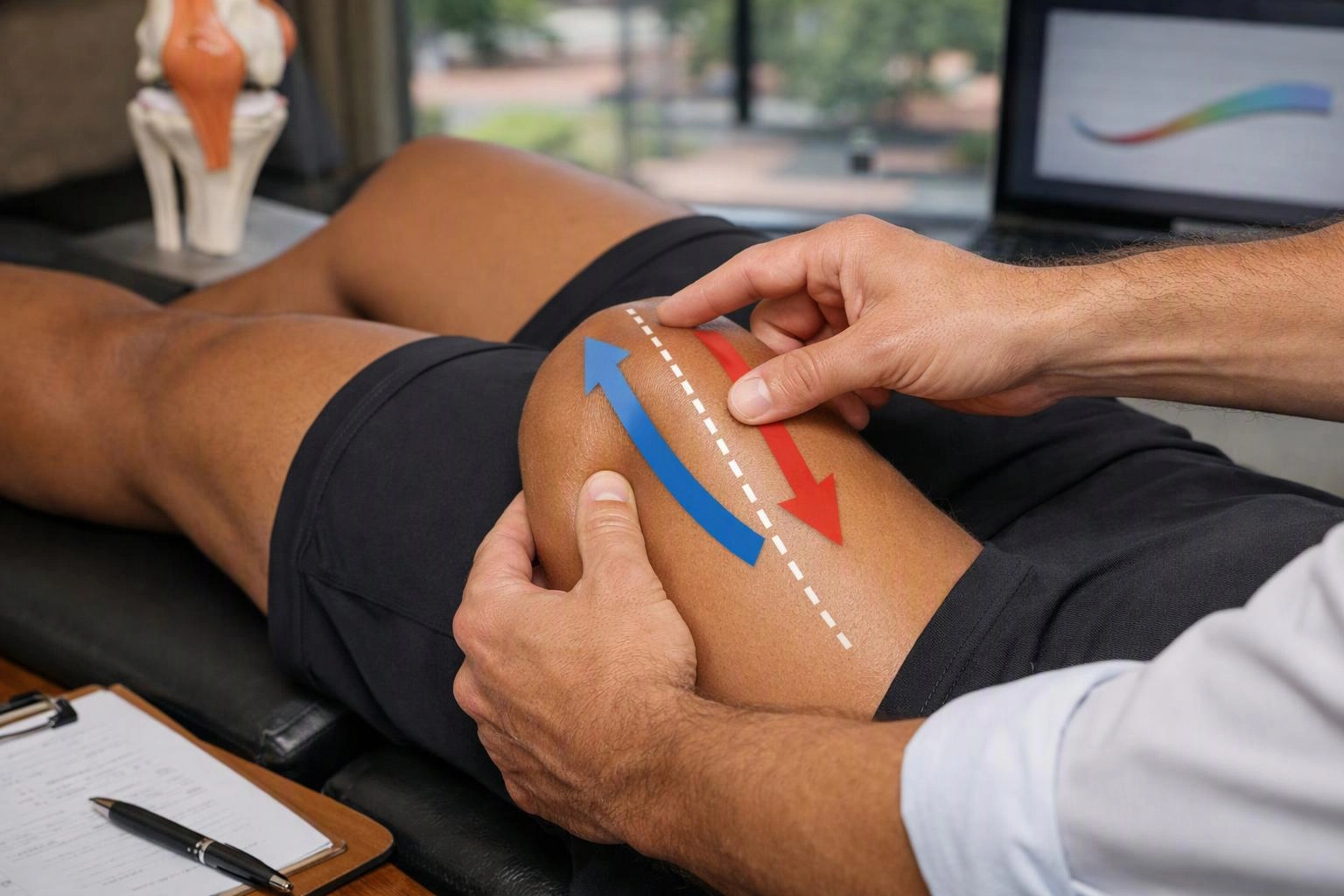
Patellar Tracking describes how the kneecap moves within the groove at the end of the thigh bone. The quadriceps muscle group helps guide this motion as the knee bends and straightens. Smooth movement depends on the relationship among the kneecap, thigh bone, shin bone, muscles, and connective tissues.
Related glossary terms: Gait Analysis, Range of Motion, Proprioception.
A clinician may observe the knee during activities that involve bending, straightening, stepping, or squatting. The assessment considers the kneecap's path, surrounding muscle control, joint mobility, and the way the foot and leg move together. A change in tracking can appear as uneven motion, pressure around the kneecap, or discomfort during loaded knee movement.
From the Arrowhead Clinic Chiropractor Atlanta team
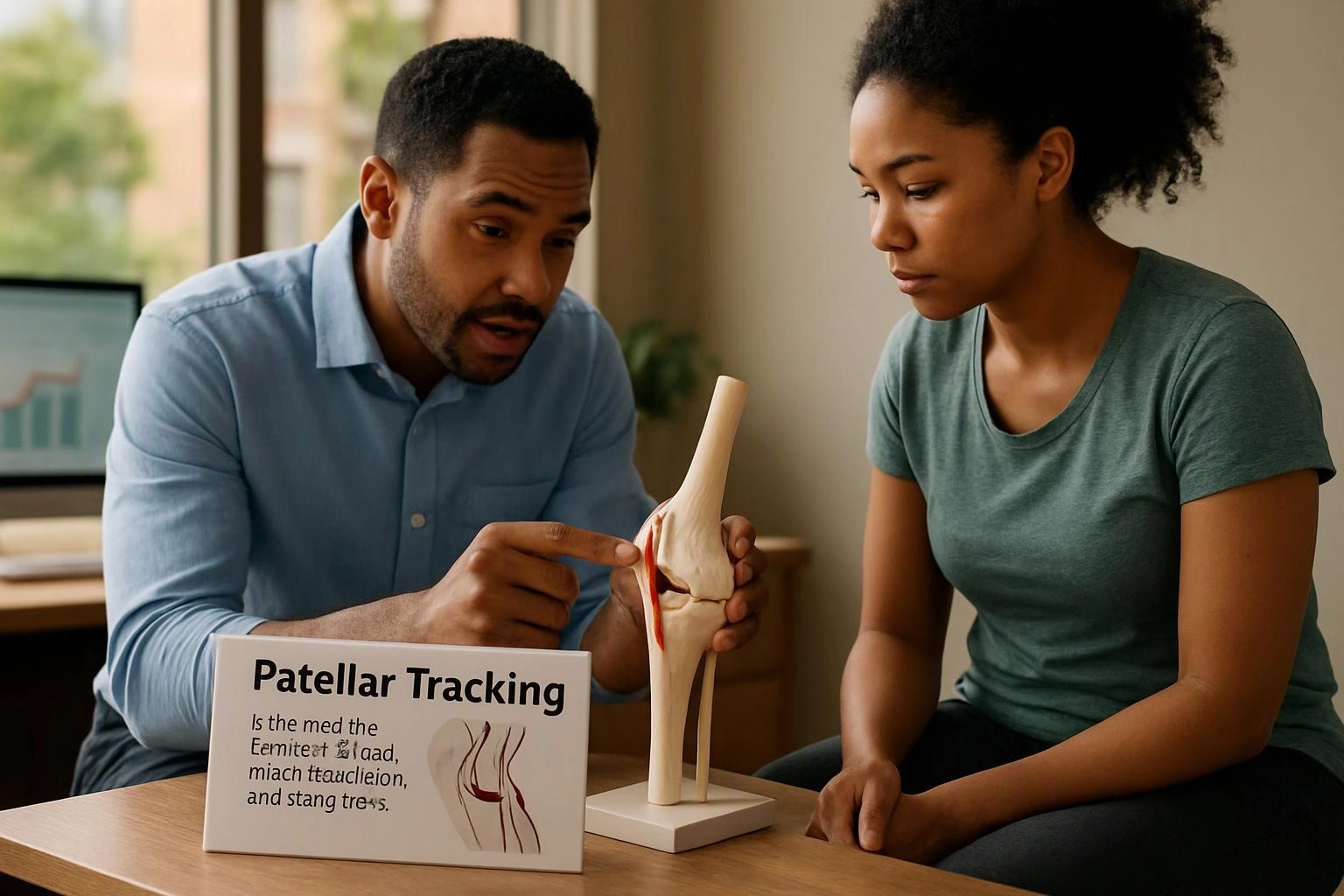
When we assess Patellar Tracking, we observe knee motion and consider how the hip, foot, and surrounding muscles influence the kneecap's path. We also review movement patterns linked to the reported knee concern. This approach helps us select care that matches the person's movement findings.
Patellar Tracking in Practice: A Real-World Example
A person with knee pain may notice discomfort while climbing stairs or rising from a chair. During an assessment, the clinician observes whether the kneecap follows a smooth path as the knee bends and straightens.
Related Services
Related Terms
Gait Analysis
A gait analysis is a structured assessment of how you walk or run. The assessment examines…
Range of Motion
Range of Motion is the movement available at a joint or across a body region. It…
Proprioception
Proprioception is the body's ability to sense the position, movement, and force of its joints and…
Arrowhead Clinic Chiropractor Atlanta
Have Questions About Patellar Tracking?
Contact Arrowhead Clinic Chiropractor Atlanta for practical guidance on Patellar Tracking and related chiropractor work in Atlanta.