
What Is Biomechanics?
Biomechanics is the study of how living bodies move and respond to forces. In health care, biomechanics examines joint motion, muscle action, posture, balance, and load during activities such as walking, lifting, or exercising. The assessment connects movement patterns with physical demands, helping guide exercise selection and movement correction.
Quick Facts About Biomechanics
Category
Movement science
Used for
Movement assessment and exercise planning
Common confusion
It is broader than posture alone
Also called
Movement mechanics, Human movement mechanics
Often discussed with
Corrective Exercise Therapy, Posture Correction
Key Takeaways About Biomechanics
- It examines movement and force together.
- It helps match exercises to movement needs.
- It is not the same as anatomy alone.
How Biomechanics Works
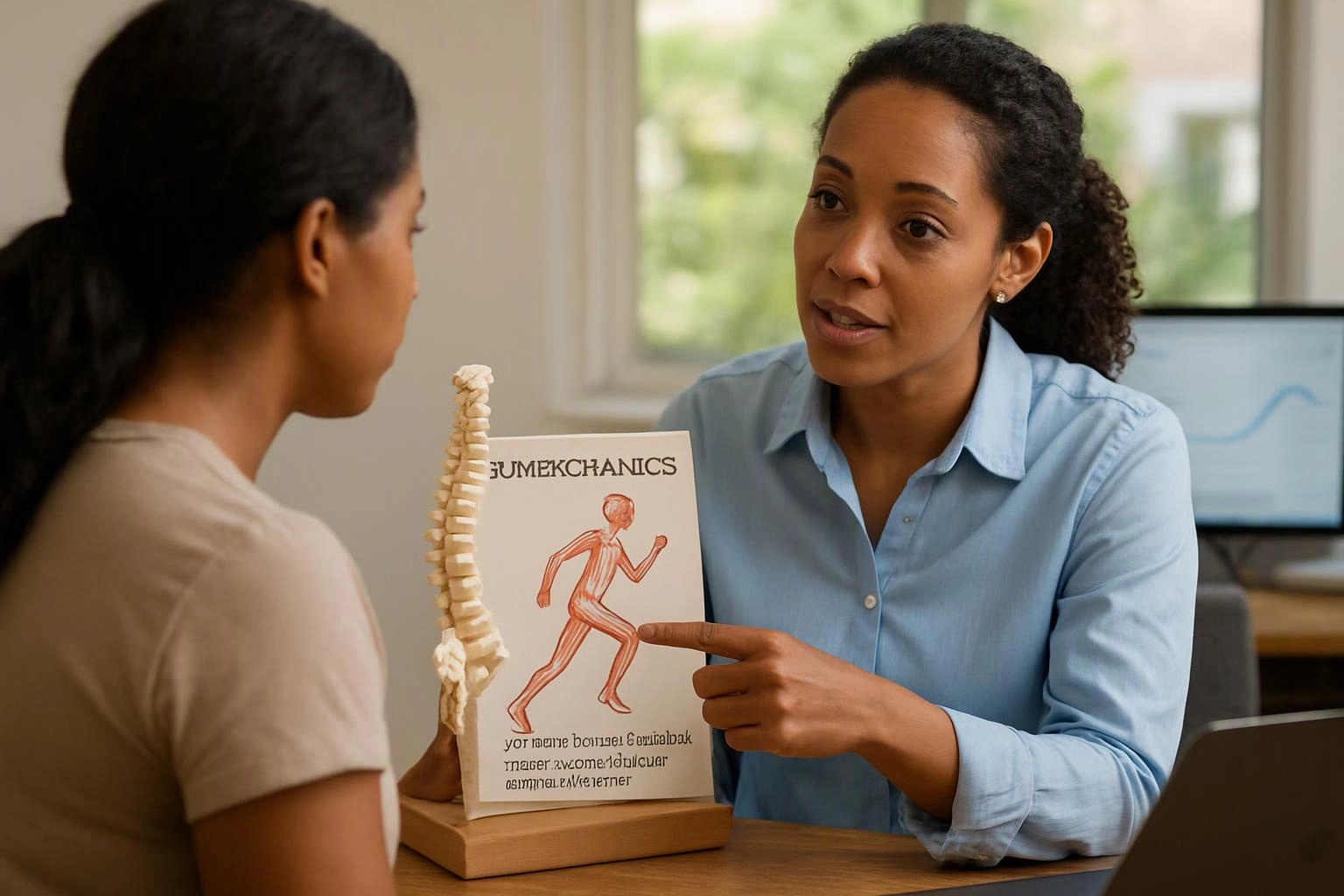
Biomechanics examines how forces act on the body during movement. Practitioners observe joint position, muscle coordination, balance, and the path of a movement. They may compare how a person stands, walks, reaches, or performs an exercise. The goal is to connect visible movement with the physical demands placed on body tissues.
Related glossary terms: Gait Analysis, Postural Assessment, Range of Motion.
Corrective Exercise Therapy applies these observations to exercise selection. An exercise may be adjusted by changing posture, resistance, range of motion, or speed. For example, a person whose knee moves inward during a squat may practice a supported version while focusing on hip and foot control. The exercise changes as movement control improves.
From the Arrowhead Clinic Chiropractor Atlanta team
When we apply biomechanics in Corrective Exercise Therapy, we observe how a person performs a movement and how different body regions contribute. We use those observations to select exercises that address control, coordination, posture, or range of motion. We also reassess movement during the exercise so the plan reflects the person’s response.
Biomechanics in Practice: A Real-World Example
A person may show a knee drifting inward during a squat. Corrective Exercise Therapy can use a supported squat and focused hip control to practice a more coordinated movement pattern.
Related Services
Related Terms
Gait Analysis
Gait Analysis is the systematic observation of how you walk or run. It examines foot placement…
Postural Assessment
A Postural Assessment is a clinical observation process that examines how the head, shoulders, spine, pelvis…
Range of Motion
Range of Motion is the available movement at a joint or body region. It describes how…
Anterior Pelvic Tilt
Anterior Pelvic Tilt is a postural pattern in which the pelvis rotates forward, often increasing the…
Arrowhead Clinic Chiropractor Atlanta
Have Questions About Biomechanics?
Contact Arrowhead Clinic Chiropractor Atlanta for practical guidance on Biomechanics and related chiropractor work in Atlanta.