
What Is Anterior Pelvic Tilt?
Anterior Pelvic Tilt is a postural position in which the front of the pelvis rotates forward and the back of the pelvis rises. This position may increase the inward curve of the lower back and change how the hips, spine, and abdominal area align during standing, walking, or other movements.
Quick Facts About Anterior Pelvic Tilt
Category
Postural alignment pattern
Used for
Posture assessment and correction planning
Common confusion
Often confused with excessive lower-back curvature
Also called
Lower Crossed Syndrome, Anterior pelvic rotation
Often discussed with
Posture Correction, Corrective Exercise Therapy
Key Takeaways About Anterior Pelvic Tilt
- The pelvis rotates forward around the hip joints.
- Standing posture and movement patterns can affect its appearance.
- It is not the same as a spinal condition.
How Anterior Pelvic Tilt Works

Anterior Pelvic Tilt occurs when the pelvis rotates forward around the hip joints. The movement changes the relationship between the pelvis and lumbar spine, which may make the lower-back curve look more pronounced. The rib cage, abdomen, hips, and knees may also shift as the body adapts.
Related glossary terms: Pelvic Alignment, Lumbar Spine, Core Stabilization.
Clinicians assess this position by observing standing alignment and movement. They may compare the front and back landmarks of the pelvis, review hip and lower-back motion, and note how posture changes during simple tasks. Pelvic Alignment describes the broader position of the pelvis, while Lumbar Spine alignment describes the lower section of the back. These terms overlap, but they describe different body regions.
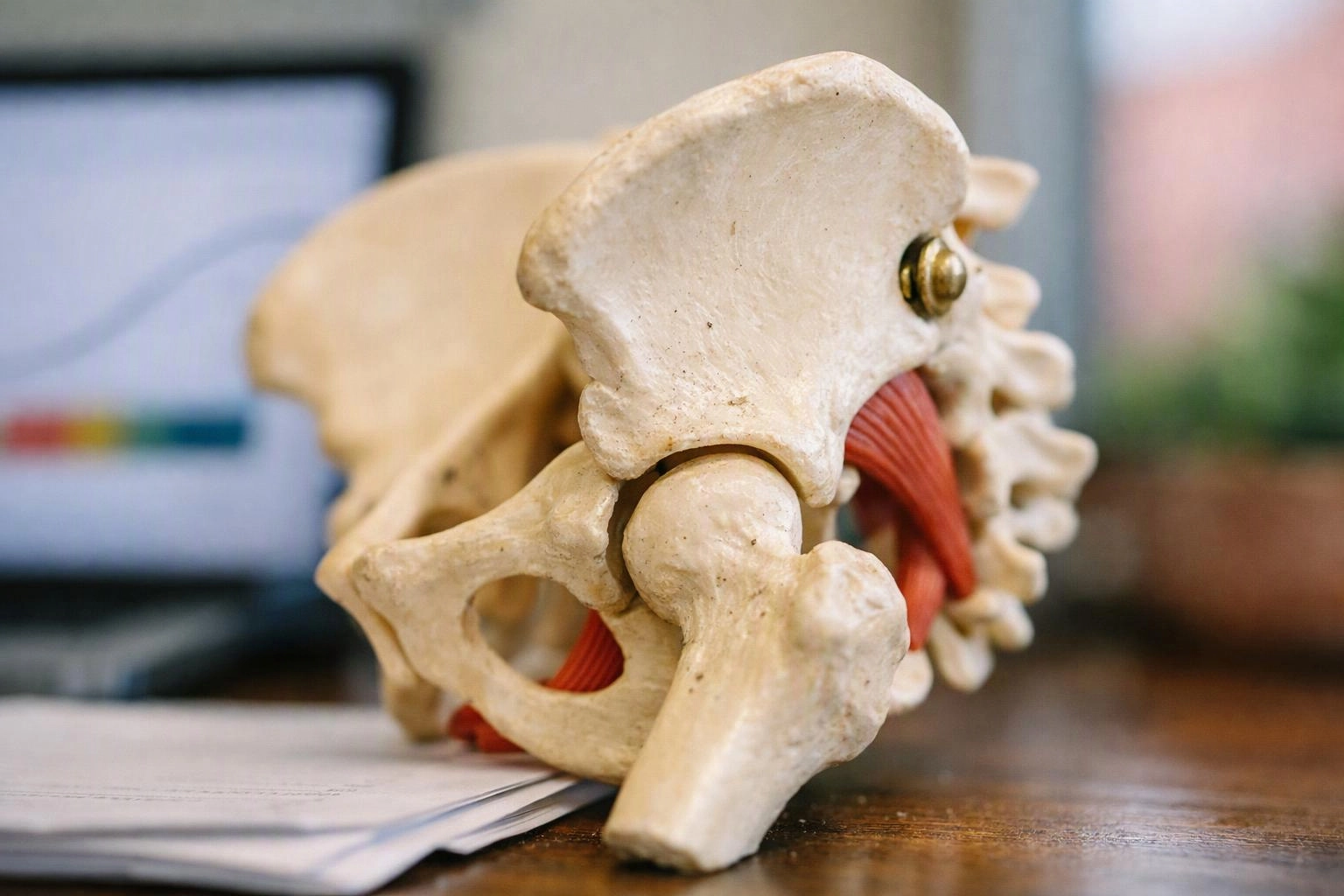
From the Arrowhead Clinic Chiropractor Atlanta team
When we assess Anterior Pelvic Tilt, we observe standing posture and movement together. Our team considers hip motion, lower-back positioning, and pelvic alignment before connecting the finding with Posture Correction. We treat the observation as part of a broader assessment, not as a diagnosis by itself.
Anterior Pelvic Tilt in Practice: A Real-World Example
A person who sits for long periods may stand with the abdomen forward and the lower back more curved. During Posture Correction, the clinician may observe whether the pelvis changes position when the person walks, bends, or adjusts the hips.
Related Services
Related Terms
Pelvic Alignment
Pelvic Alignment is the balanced positioning of the pelvis in relation to the spine, hips, and…
Lumbar Spine
Lumbar Spine is the lower section of the vertebral column between the thoracic spine and pelvis…
Core Stabilization
Core Stabilization is a corrective exercise approach that trains the muscles around the abdomen, pelvis, and…
Range of Motion
Range of Motion is the movement available at a joint or across a body region. It…
Arrowhead Clinic Chiropractor Atlanta
Have Questions About Anterior Pelvic Tilt?
Contact Arrowhead Clinic Chiropractor Atlanta for practical guidance on Anterior Pelvic Tilt and related chiropractor work in Atlanta.