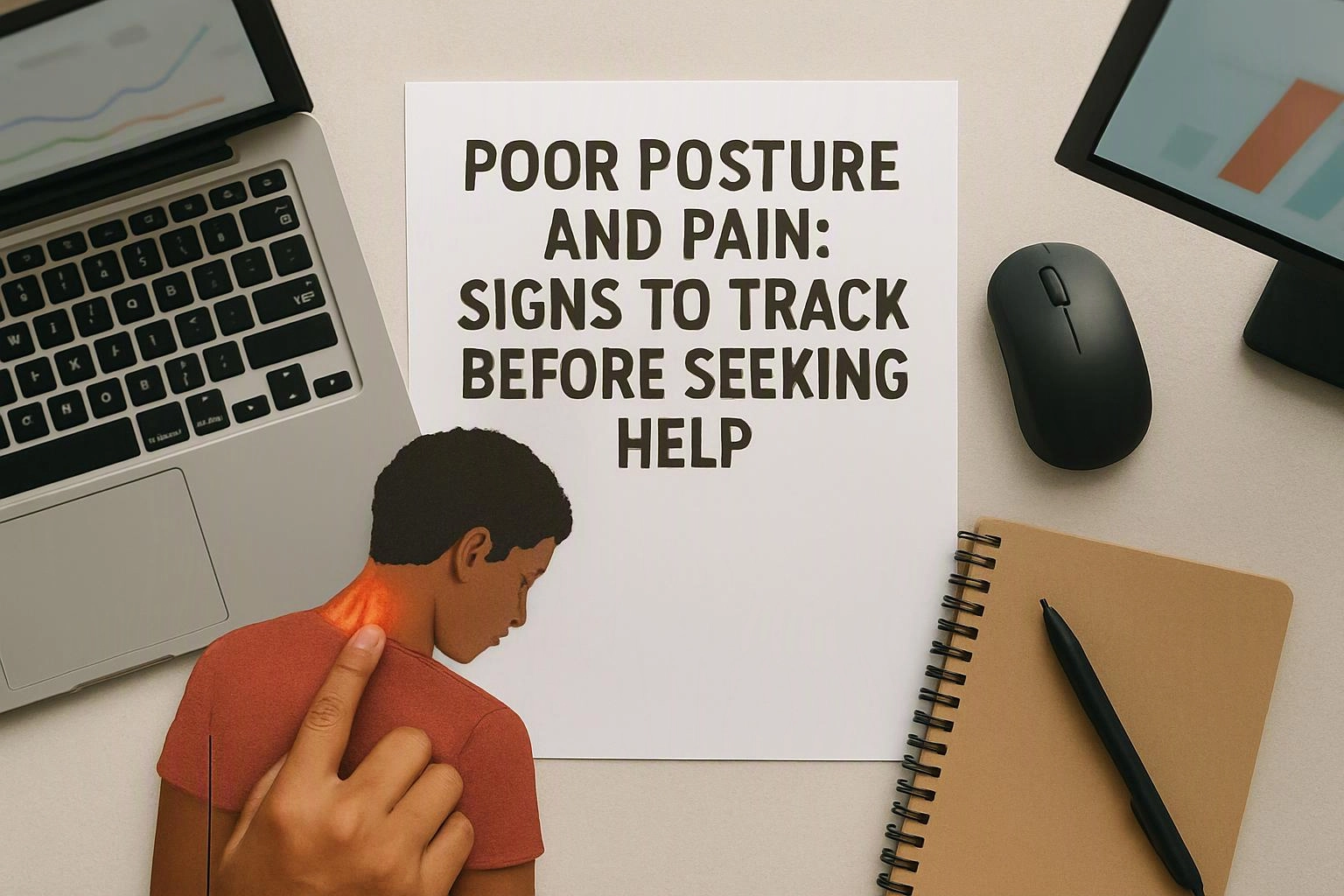
Poor Posture and Pain: Signs to Track Before Seeking Help
Poor posture symptoms can include neck, shoulder, and back pain, rounded shoulders, forward head position, stiffness, and discomfort that changes with position. Arrowhead Clinic Chiropractor Atlanta evaluates these patterns through posture correction and corrective exercise guidance.
Written by Dr. Clifton Weldon
Request an EstimateHow Poor Posture Can Relate to Neck and Back Pain
Yes, poor posture can contribute to neck, shoulder, and back discomfort by changing how the head, spine, and surrounding muscles are loaded. Arrowhead Clinic Chiropractor Atlanta reviews these loading patterns during a clinical evaluation.
Poor posture can place extra demand on the neck, shoulders, upper back, and lower back. Spinal alignment can also change when the head moves forward or the upper back rounds, which may contribute to neck pain, back pain, or shoulder pain.
Our team looks at how symptoms behave with different positions and movements. We use those findings to guide posture correction and corrective exercise therapy when they fit the person’s needs.
Common Poor Posture Symptoms to Notice
Common poor posture symptoms include neck stiffness, shoulder tension, upper back discomfort, low back pain, and symptoms that change when you sit, stand, or move. These symptoms may develop with rounded shoulders, forward head posture, or prolonged muscle loading.
Rounded shoulders can change how the upper back and shoulder muscles work. A forward head position may increase demand on the neck and contribute to neck stiffness, upper back tension, or muscle fatigue.
Low back discomfort can also appear when sitting posture or standing posture changes the way the lower back and core muscles support the body. We assess the full movement pattern because one symptom may involve more than one body area.
For more detail about concerning symptoms, our guides Lower Back Pain: Symptoms That Mean It’s Time to Get Evaluated and Neck Pain and Stiffness: A Checklist for Knowing When to Get Help may help you organize your questions.
What to Track Before Seeking Help
Pain tracking before an assessment can show how symptoms relate to posture, movement, and daily activities. Use a simple note on paper or a device to record changes without trying to diagnose the cause yourself.
Before the consultation
Which Pain Changes Can Reveal a Posture Pattern?
Pain that changes with sitting, standing, movement, or rest can help show whether posture and activity are contributing to the symptom pattern. A change does not prove the cause, but it gives our team useful information for an assessment.
Notice whether sitting posture increases discomfort after desk work or screen viewing. Record whether standing posture, walking, or a change in movement reduces or increases the symptoms.
Also note pain triggers and pain relief. We compare these observations with spinal mobility, muscle balance, and functional limits during the evaluation.
Our Posture Correction service focuses on how posture habits and movement affect everyday comfort.
What to Note During a Typical Day
Daily activity notes can reveal when posture-related pain begins, worsens, or improves. Track ordinary tasks because repeated positions often provide more useful information than a single isolated event.
During a typical day
Warning Signs That Need Prompt Attention
Neurological warning signs or severe changes need prompt medical attention. We recommend treating these symptoms as more urgent than ordinary posture-related stiffness.
What to Review After Tracking Your Symptoms
Reviewing a symptom diary can help you identify recurring patterns before an assessment. Bring the notes to our team so we can compare your observations with movement and posture findings.
After tracking symptoms
When Should Posture-Related Pain Be Assessed?
Posture-related pain should be assessed when symptoms persist, recur, limit normal activities, or occur with numbness, weakness, coordination changes, or other warning signs. Arrowhead Clinic Chiropractor Atlanta uses the symptom pattern to help determine the next appropriate step.
Persistent pain can affect work, sleep, exercise, and daily activities. Recurring pain can also point to a movement or posture habit that deserves closer review.
Our clinical assessment considers neurological symptoms, pain behavior, movement, and functional limitations. Prompt attention is especially important when symptoms are severe, sudden, or progressively changing.
How Arrowhead Clinic Chiropractor Atlanta Evaluates Posture-Related Neck and Back Symptoms
Arrowhead Clinic Chiropractor Atlanta reviews posture, movement, symptom behavior, and functional limitations to guide posture correction, corrective exercise therapy, neck pain treatment, or back pain treatment.
Our team begins with your symptom history and observes how the head, neck, shoulders, spine, and core muscles work during movement. We assess spinal mobility and muscle balance to understand how the movement pattern may relate to discomfort.
Corrective exercise therapy may be included when targeted movement can support improved control and comfort. We match the guidance to the findings rather than treating every posture pattern the same way.
How to Prepare for a Posture Correction Consultation
A posture correction consultation is easier to use when you bring a clear symptom history, daily routine, previous injuries, and treatment goals. Your notes can help our team connect symptoms with the positions and activities that matter most to you.
Bring your symptom diary if you kept one. Include questions about desk work, driving, sleep position, exercise, or lifting mechanics so we can discuss practical changes.
Arrowhead Clinic Chiropractor Atlanta offers Free Consultations for people who want to discuss their concerns and possible care options. Contact us through our consultation page.
Questions About Poor Posture and Pain
Can rounded shoulders cause neck pain?
Yes, rounded shoulders can contribute to neck pain by changing how the upper back, shoulders, and neck muscles are loaded. Arrowhead Clinic Chiropractor Atlanta evaluates these relationships through posture and movement assessment.
Can forward head posture contribute to back pain?
Yes, forward head posture can contribute to back pain when it changes spinal loading and increases demand on surrounding muscles. Tracking changes with sitting, standing, and movement can help our team assess the pattern.
How can I tell whether my pain changes with posture?
Pain changes with posture when symptoms increase or ease after a position change, such as sitting, standing, moving, or resting. Record the position, activity, pain location, and change in symptoms so the pattern is easier to review.
Should I track posture-related pain before a consultation?
Yes, symptom tracking can help show recurring triggers, activity patterns, and posture-related changes before a consultation. A simple symptom diary gives our team useful context for the assessment.
Arrowhead Clinic Chiropractor Atlanta can review your posture patterns, symptom history, and movement concerns during a consultation. Contact us to discuss your next step.
Written by Dr. Clifton Weldon.