Neck Pain and Stiffness: A Checklist for Knowing When to Get Help
Neck pain symptoms need urgent care when they follow serious injury or occur with weakness, numbness, severe headache, fever, or trouble walking. Arrowhead Clinic Chiropractor Atlanta evaluates neck pain, stiffness, posture, and radiating symptoms to help determine an appropriate next step.
Written by Dr. Clifton Weldon
Request an EstimateWhat Neck Pain Symptoms Mean for Your Next Step
Neck pain symptoms that are mild and improving may allow cautious self-care, while persistent, worsening, radiating, or neurological symptoms warrant evaluation.
Neck discomfort can come from the cervical spine, neck muscles, or cervical joints. The pattern, severity, and progression of symptoms help us determine whether you may need self-care, a healthcare evaluation, or urgent medical attention.
Our team connects your symptoms with movement, posture, injury history, and daily activities. You can review our Neck Pain Treatment service to see how we approach evaluation and care.
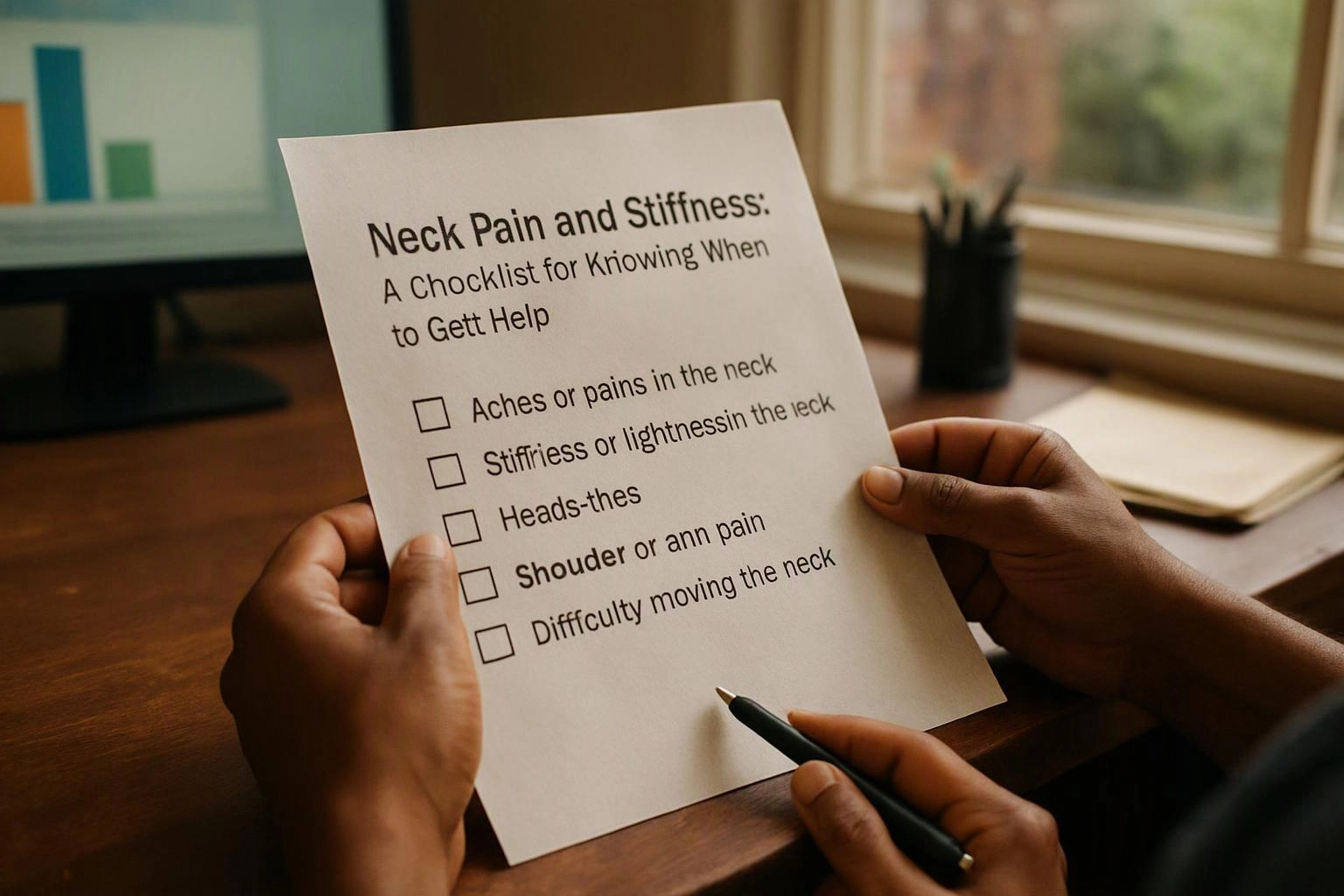
Before You Decide to Seek Care
Before choosing a care level, review how your neck pain started and how it is changing.
This checklist helps organize the details that guide a symptom assessment. Seek urgent medical care when serious warning signs are present.
These details give our team a clearer view of symptom progression. They also help separate a routine evaluation need from symptoms that need urgent attention.
Red Flags That Need Urgent Medical Attention
Neck pain with weakness, loss of sensation, trouble walking, loss of bladder or bowel control, fever, severe headache, or serious trauma needs urgent medical attention.
These symptoms can point to more than a routine musculoskeletal symptom. Do not delay urgent medical care when severe neck pain follows serious trauma or appears with spinal cord symptoms.
Urgent symptoms should be assessed through urgent medical care. Our team can help with evaluation when symptoms do not show these warning signs, but urgent red flags require medical attention first.
During Your Symptom Check
A symptom check should connect pain location with movement, daily posture, and arm symptoms.
Use the questions below to describe what you feel during normal activities. Clear answers help us understand whether limited movement or nerve irritation may be involved.
Computer work and driving can make neck pain worse when sustained positions increase muscle tension or joint irritation. Our team considers these triggers when discussing posture correction and care options.
Why Neck Pain Can Spread Into an Arm
Radiating neck pain can reflect irritation of a cervical nerve, especially when pain occurs with tingling, numbness, or weakness.
Cervical nerves travel from the neck toward the shoulder and arm. Irritation or pressure around these nerves can create arm weakness, arm numbness, or arm tingling along with neck pain.
Our team checks the symptom pattern and neurological signs before discussing neck pain treatment. Symptoms that progress or include clear weakness need prompt medical evaluation.
Why It Can Be Hard to Turn Your Head
Difficulty turning the head can result from muscle tension, irritated neck joints, or protective muscle guarding after strain or injury.
Limited range of motion may occur when the neck muscles tighten to protect an irritated area. Joint irritation and acute neck stiffness can also make normal head movement uncomfortable.
We assess movement without forcing painful motion. Our findings help us decide whether a chiropractic evaluation or another healthcare evaluation fits the symptom pattern.
After You Choose the Right Level of Care
The right next step depends on the symptoms you identified and the risks connected to them.
Use the sequence below to keep urgent concerns separate from routine evaluation needs. Our team can explain care options when your symptoms fit a chiropractic evaluation.
We match the evaluation to the symptom pattern rather than treating every neck ache the same way. Care decisions can change if symptoms progress or new neurological symptoms appear.
How Our Team Evaluates Neck Pain and Stiffness
Arrowhead Clinic Chiropractor Atlanta evaluates symptom patterns, movement, posture, and neurological warning signs before recommending neck pain treatment.
We begin with a neck pain assessment that covers onset, pain location, triggers, and symptom progression. Our team then reviews posture and range of motion to see how the cervical spine and surrounding neck muscles respond to movement.
A neurological screening helps us identify concerning changes involving the cervical nerves, sensation, coordination, or strength. We use these findings to decide whether chiropractic care is appropriate or whether urgent medical attention is needed.
When care is appropriate, we explain the purpose of each recommended step. A chiropractic adjustment is considered only when it fits the examination and your treatment goals.
What to Bring to a Neck Pain Evaluation
A neck pain evaluation is more useful when you bring a clear symptom timeline and relevant health information.
Write down what makes the pain better or worse before your visit. Include details that show how the symptoms affect work, driving, sleep, and daily movement.
Bring your previous injury history, current medications, and relevant medical records. Also describe your pain triggers, movement limits, arm symptoms, and treatment goals so our team can build a focused assessment.
These details help us connect symptoms with posture, computer work, driving, and other repeated activities. They also help us identify changes that may need medical attention.
When a Neck Pain Evaluation Is the Right Next Step
A neck pain evaluation is appropriate when symptoms persist, interfere with movement or daily activities, return repeatedly, or extend into the shoulder or arm.
Persistent neck pain and recurrent neck stiffness deserve attention when they do not settle with reasonable self-care. Posture-related pain, work-related strain, and driving-related strain can also benefit from an assessment when they keep returning.
Radiating symptoms require closer attention when they include arm numbness, arm weakness, or tingling. We review these signs with your movement and posture to help determine the next appropriate step.
Questions About Neck Pain and Stiffness
Can computer work or driving make neck pain worse?
Yes, computer work or driving can make neck pain worse when sustained posture increases muscle tension or joint irritation. Arrowhead Clinic Chiropractor Atlanta reviews computer posture, driving posture, head position, and symptom triggers during an evaluation.
Should I see a chiropractor for neck pain after an injury?
Neck pain after an injury should be assessed based on the injury severity and your symptoms. Urgent medical care is appropriate for serious trauma, weakness, numbness, trouble walking, severe headache, fever, or loss of bladder or bowel control; our team evaluates non-urgent symptoms after those warning signs have been addressed.
Can neck pain cause headaches?
Neck pain can occur with headaches when neck muscles, joints, posture, or movement patterns contribute to discomfort. A severe headache with neck pain, especially after serious trauma or with fever or neurological symptoms, needs urgent medical attention.
What should I avoid if my neck is stiff?
People with a stiff neck should avoid movements or activities that sharply increase pain, arm symptoms, or neurological changes. Keep daily movements comfortable, avoid forcing restricted range of motion, and seek evaluation when stiffness persists, worsens, or follows an injury.
Dr. Clifton Weldon provides the clinical guidance for this article. Arrowhead Clinic Chiropractor Atlanta can review your neck pain, stiffness, posture, movement limits, and radiating symptoms to help identify the appropriate next step.
Contact our team for a neck pain evaluation when symptoms persist or interfere with daily activities.